Teeth grinding and stress: symptoms, causes and how to tell if stress is behind it
You wake up with an aching jaw or catch yourself clenching your teeth at the computer. What bruxism is, what stress has to do with it and which test can guide you.
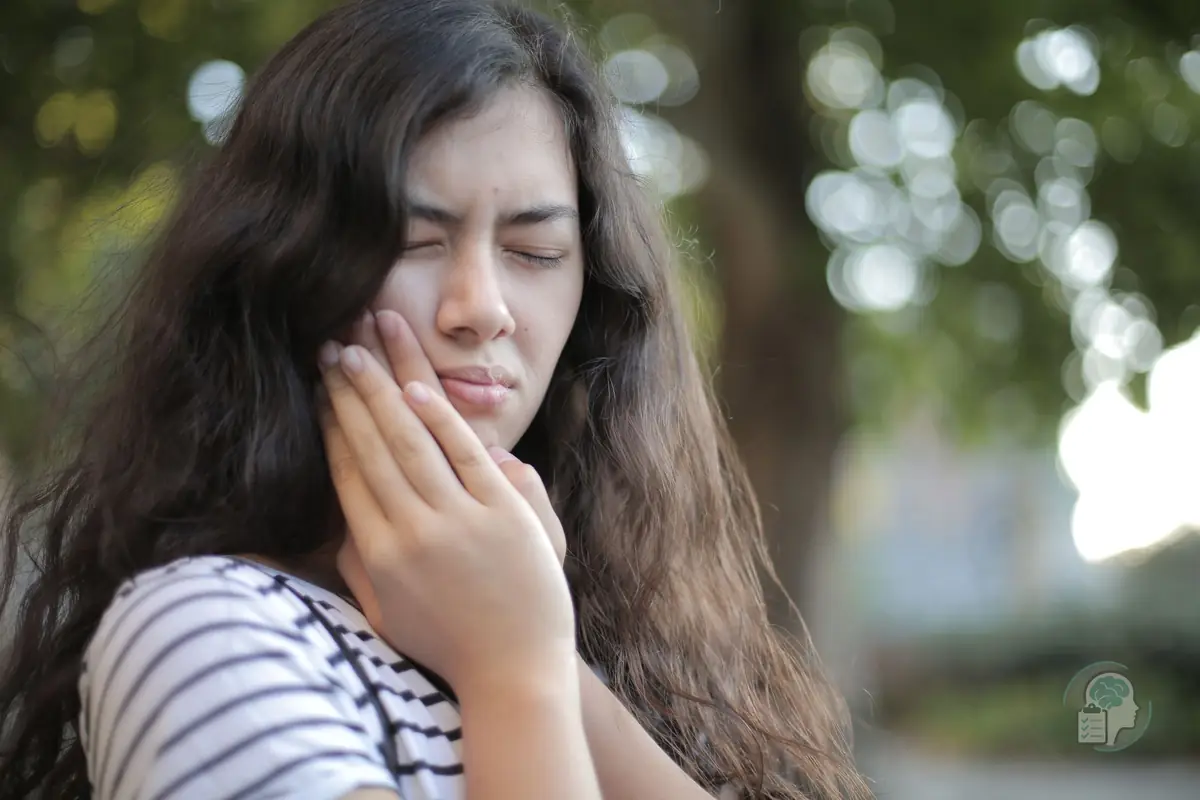
You are answering emails and suddenly notice that your teeth are clenched and your shoulders are up by your ears. You have no idea how long it has been like that. Mornings are similar: you wake up with an aching jaw and a dull pain near your ear, and your partner tells you that you grind your teeth at night.
That has a name: bruxism. And stress is its most common cause, according to the NHS. This guide explains what teeth grinding caused by stress is, how it shows, what research says about its link with stress and anxiety, what else can cause it, what to do and which test can help you see how much stress you are carrying.
What bruxism is
An international group of experts led by Frank Lobbezoo defines it as repetitive activity of the chewing muscles that involves clenching or grinding the teeth, or holding the jaw tense or pushing it forward. In their latest consensus they added an important point: in otherwise healthy people, bruxism should not be seen as a disorder but as a behaviour that can be a risk factor for some problems, and in certain cases even a protective one.
Awake bruxism and sleep bruxism
The same consensus distinguishes two types:
- Sleep bruxism: the muscle activity happens while you sleep, in a rhythmic or sustained way. Often someone else discovers it by hearing you grind, or you suspect it when you wake up with a tired jaw.
- Awake or daytime bruxism: it happens during the day, with repeated or sustained contact between the teeth, or by tensing or pushing the jaw forward. It is the kind that appears at the computer, in a traffic jam or in a tense conversation.
It is more common than it seems. A review by Manfredini and colleagues put awake bruxism at between 22.1% and 31% of adults, and frequent sleep bruxism at around 12.8%, although the studies were of poor quality. A more recent meta-analysis by Stanisic and colleagues, covering 94 studies, found that one in four people in the general population (25.9%) report awake bruxism, as do half of those with a temporomandibular disorder.
Symptoms of bruxism: how to tell if you clench your teeth
According to the NHS, bruxism can happen while you are awake or asleep and, as well as grinding your teeth and clenching your jaw, it can cause:
- A painful jaw, which can lead to a temporomandibular disorder.
- Worn-down or broken teeth, with more sensitivity and loss of teeth or fillings.
- Headaches.
- Earache.
- Disturbed sleep.
Sleep bruxism does not always show: sometimes the first clue is what your partner tells you or the wear your dentist spots at a check-up. Awake bruxism is easier to catch if you watch yourself: a clenched jaw while you concentrate, teeth together when you are not eating or talking. If headaches are what bother you most, Tension headache: symptoms, the link with stress and when to worry may be useful.
Bruxism and stress: what the research says
The NHS is clear: teeth grinding is often related to stress or anxiety, and that is its most common cause. Research confirms this, with some nuances:
- A meta-analysis by Chemelo and colleagues found that people under stress were twice as likely to have bruxism, although the certainty was low because there were few studies.
- The link is clearer for awake bruxism. The review by Stanisic points out that, unlike sleep bruxism, awake bruxism is more strongly associated with psychosocial factors.
- For sleep bruxism, the evidence is more disputed. A review by Polmann and colleagues concluded that its link with anxiety in general is controversial, although some specific symptoms within the anxiety spectrum, such as panic symptoms, did seem to be associated.
In practice, if you clench mostly during the day and at tense moments, stress is the first suspect. If it only happens at night, it is worth looking at other causes too.
Other causes of bruxism
Stress is not the only one. The NHS also lists:
- Sleep problems, such as snoring and sleep apnoea.
- Some medicines for sleep problems, depression or anxiety.
- Smoking.
- Drinking lots of alcohol or caffeine.
An umbrella review by Melo and colleagues, which pulled together 41 systematic reviews, found that the factors most consistently linked to bruxism were alcohol, caffeine, tobacco, some psychiatric medicines, acid reflux and second-hand smoke.
On antidepressants, a review of published case reports by Garrett and Hawley found that fluoxetine, sertraline and venlafaxine were the most often reported, that symptoms could start within the first three or four weeks, and that they usually cleared up in a similar period after stopping the drug, adding another one or switching to a different one. How often it happens is unknown. If it happens to you, talk to your doctor and do not stop your medication on your own.
How to tell if stress is behind your bruxism
There is no test that confirms it, but these clues help:
| What your bruxism is like | What may be behind it | What can guide you |
|---|---|---|
| During the day, at moments of pressure, with tension in the neck and shoulders | Stress | Stress Test |
| With almost constant nerves, worry that is hard to stop or palpitations | Anxiety | Anxiety Test |
| At night, with loud snoring or sleep that does not refresh you | Sleep problems or apnoea | Your GP and the Insomnia Test |
| It began soon after starting an antidepressant | A side effect of medication | Your doctor |
| With lots of coffee, alcohol or tobacco | Habits | Cutting down and seeing if it changes |
The causes add up: a stressful period often comes with worse sleep and more coffee. If you find it hard to tell whether it is stress, anxiety or burnout, we explain the difference in Stress, anxiety or burnout: how to tell what is happening to you.
Is there a test for stress-related teeth grinding?
No online test can diagnose bruxism. A dentist assesses it, and researchers use questionnaires and recordings of muscle activity. What you can measure is stress. The MyPsicoTest Stress Test includes this statement: "I have noticed my body tensing up: stiff neck, shoulders or jaw". And two more that often go hand in hand with bruxism: "I have had headaches or a feeling of pressure in my head at the end of the day" and "I have found it hard to fall asleep or have woken in the early hours turning things over in my mind".
It has 14 statements about the last month, which take about four minutes to answer according to how often each thing has happened, from "never" to "very often". They fall into three areas: overload and lack of control (six), physical symptoms and sleep (four) and coping resources (four, which are scored in reverse). The score runs from 0 to 56, with four guidance levels (low, mild, moderate and high) and a breakdown by area. That breakdown matters: as the test page explains, some people pile up physical symptoms and sleep badly but still feel in control. The result is calculated in your browser and your answers are not stored.
Other tests that may help
If, as well as clenching your teeth, you feel on edge most of the time, the Anxiety Test asks about the last two weeks and includes this statement: "My body has felt tense: clenched jaw, tight shoulders, headaches or an upset stomach". And if you sleep badly, the Insomnia Test asks, among other things, whether you rely on caffeine from mid-afternoon or on alcohol at night, two habits the NHS links to teeth grinding. All the questionnaires, free and anonymous, are in the psychological tests catalogue.
What to do if you clench your teeth because of stress
During the day
- Learn to catch yourself. Researchers use apps that prompt you several times a day to record what state your jaw is in: relaxed, tense without the teeth touching, teeth in contact, clenching or grinding. Only the first one is rest. A study of Portuguese university students found that this kind of logging helps people notice habits such as bracing the jaw or keeping the teeth together. You can do something similar with alarms on your phone.
- Find ways to relax. The NHS suggests breathing exercises, listening to music and regular exercise.
- Deal with the underlying stress. If your test score is high, relaxing your jaw is not enough: it is worth looking at your workload, your rest and how you handle problems.
At night
- Look after your sleep: go to bed at the same time every night, relax before bedtime and keep your bedroom dark and quiet, as the NHS recommends. Sleep hygiene: which tips work and when they are not enough to sleep well may help.
- Cut down on alcohol and caffeine, and stop smoking.
- Ask your dentist about a splint. According to the NHS, your dentist may recommend a mouth guard or splint that you wear at night to protect your teeth from damage. Reviews agree it is the best-supported treatment for sleep bruxism, although it protects your teeth without removing what lies behind the grinding.

If your jaw hurts
The NHS advises taking paracetamol or ibuprofen if there is pain or swelling, holding an ice pack wrapped in a tea towel against your jaw for 20 to 30 minutes, and avoiding chewing gum and hard foods while it hurts.
When to see a dentist or a doctor
See a dentist if your teeth are damaged or sensitive, if your jaw, face or ear hurts, or if your partner hears you grinding at night. And ask your GP for help if what lies behind it is stress, anxiety, smoking, alcohol or other drugs.
About psychological therapy, it is worth being honest: reviews have not shown that it reduces sleep bruxism on its own, and there are still no official guidelines for awake bruxism. Biofeedback, which alerts you when you clench, is being studied, and a review by Vieira and colleagues found that it can reduce muscle activity within a few days, although the studies were of low quality. But if stress or anxiety are taking their toll, treating them makes sense in its own right. At the end of the test you will find our recommendation of a licensed psychologist who works with stress and anxiety, online too.
If your result worries you or you want a professional assessment, you can talk to Xènia Capel Salcedo, a licensed psychologist (COPC reg. 14982), who offers a free first consultation call and online therapy from anywhere.
MyPsicoTest team · Updated:
FAQ
Frequently asked questions
Can stress cause teeth grinding?
Yes. The NHS names stress and anxiety as the most common cause, and a meta-analysis found that people under stress are twice as likely to have bruxism. The link is clearest for bruxism that happens during the day.
How do I know if I grind my teeth at night?
The most common clues are waking up with a tired or sore jaw, headaches or earache, worn-down or more sensitive teeth, or your partner hearing you grind. Your dentist can confirm it.
What is the difference between sleep bruxism and awake bruxism?
Sleep bruxism happens while you sleep. Awake bruxism happens during the day, by clenching your teeth, keeping them in contact or tensing your jaw, and it is the type most closely linked to stress and other psychological factors.
Can bruxism be cured?
In healthy people it is not considered a disorder but a behaviour that can cause problems. A splint protects the teeth, and reducing stress, alcohol, caffeine and smoking and sleeping better help keep it under control.
Does a mouth splint stop bruxism?
It protects your teeth from wear while you sleep and is the best-supported treatment for sleep bruxism, but it does nothing about the stress that may lie behind it.
Can antidepressants cause teeth grinding?
It can happen. In published cases, fluoxetine, sertraline and venlafaxine were the most often reported, and symptoms usually started in the first few weeks. Talk to your doctor and do not stop your medication on your own.
Is there a test to find out if my teeth grinding is caused by stress?
There is no bruxism test, but the MyPsicoTest stress test asks about jaw tension, headaches and sleep and gives a result broken down by area. The anxiety test also includes a clenched jaw.
Related articles
Tension headache: symptoms, the link with stress and when to worry
A pressure across your forehead or temples that arrives mid-afternoon, when the day weighs on you. What a tension headache is, how stress is involved and when to get advice.

How to control anger: why you snap and what actually works
A comment, a traffic jam, someone interrupting you, and you snap. Then comes the regret. What works to control anger, what does not, and when it is worth working on it in therapy.
Compassion fatigue: what it is, the symptoms and how to tell if it is happening to you
You care for other people every day and notice you no longer feel the same, or that you feel everything too much. What compassion fatigue is and which test can help you measure it.