Mood & anxiety
Social Anxiety Test: Is It Shyness or Social Phobia?
A free, anonymous 15-question screening questionnaire to assess fear of judgement, avoidance of social situations and the physical symptoms of social anxiety.
Before you start
Think about the last month and indicate how much each statement describes what happens to you.
Before you start
Answer honestly, thinking about how you have usually felt or behaved during the stated period. There are no right or wrong answers.
Your answers are never sent to a server: the test is scored on your device and we store no data.
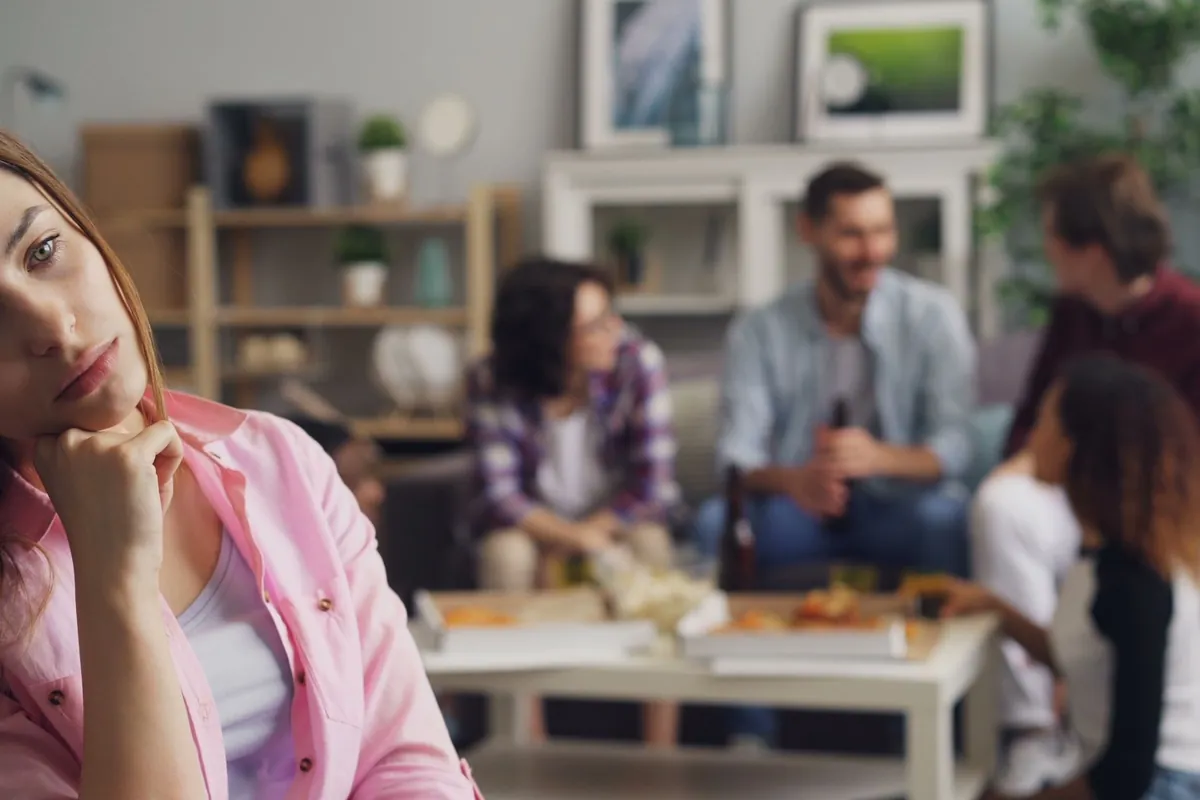
Do you spend the days before a meeting, a dinner or a presentation picturing everything that could go wrong, and then replay every sentence you said afterwards? Social anxiety, also known as social phobia, goes far beyond shyness: it is an intense fear of being judged that leads you to avoid important situations and to suffer in silence through the ones you cannot avoid. This test helps you find out in four minutes whether what you feel deserves attention, with no sign-up and without sending your answers to any server.
What is social anxiety (social phobia)?
Social anxiety disorder, formerly known as social phobia, is an intense, persistent fear of situations in which you may be watched or evaluated by other people. What is feared is not the situation itself but the possibility of making a fool of yourself, being shown up or displaying signs of nervousness (blushing, trembling, going blank) and being judged negatively for it. According to the DSM-5-TR it is one of the most common anxiety disorders: 12-month prevalence is around 7% in the United States and 2-3% in Europe, and it usually begins in adolescence, with a median age of onset of 13.
Social anxiety, shyness and introversion are not the same
- Shyness is a temperament trait: some initial discomfort with strangers that fades with time and does not stop you doing what you want.
- Introversion is a preference: introverted people enjoy quiet settings and recharge alone, but they are not afraid of being judged.
- Social anxiety is a disproportionate fear that causes suffering, leads to avoiding important situations and limits your working, academic or emotional life.
A person with social anxiety may long for friends or a partner and, at the same time, avoid every situation in which they could find them. That conflict between what they want and what the fear allows is the key to telling it apart from simple shyness.
Symptoms of social anxiety and the most feared situations
The symptoms of social anxiety fall into three levels that feed one another: what you think, what you feel in your body and what you do to protect yourself.
Fear of judgement (cognitive symptoms)
- A conviction that others are watching you and judging you negatively.
- Anticipatory anxiety: days of worry before an event.
- Attention focused on yourself during the situation ("they can surely see me shaking").
- Post-event rumination: replaying the conversation over and over looking for mistakes.
Physical symptoms
- Blushing, sweating, trembling hands or a shaky voice.
- Palpitations, shortness of breath, nausea or an upset stomach.
- Mind going blank, difficulty finding words, a faltering voice.
Avoidance and safety behaviours
- Avoiding public speaking, speaking up in meetings or being the centre of attention.
- Turning down parties, dates, interviews or events where you would have to meet people.
- Avoiding eating, drinking, writing or working while being watched; putting off phone calls.
- "Safety behaviours": checking your phone, rehearsing sentences, saying little, avoiding eye contact or drinking alcohol to loosen up.
The most feared situations are usually public speaking, meeting new people, dealing with authority figures, eating in front of others, phone calls and having to ask for something or express disagreement. In some people the fear is limited to performances or presentations (the DSM-5-TR calls this the "performance only" specifier); in most, it affects almost any interaction.
How does this online social anxiety test work?
This questionnaire consists of 15 statements spread across three areas: five measure fear of judgement (including post-event rumination), five measure avoidance of social situations and five measure the physical symptoms that appear when you feel watched. The structure follows the dimensions assessed by reference scales such as the Social Phobia Inventory (SPIN) and the Liebowitz Social Anxiety Scale, although the items are original.
For each statement you indicate how much it describes what has happened to you over the last month, from "not at all" (0 points) to "extremely" (4 points). At the end you get a total score from 0 to 60 and a breakdown by area showing whether your anxiety is expressed mainly in thoughts, in avoidance or in your body. It takes about four minutes.
The calculation is done entirely in your browser: we do not ask for your name or email and we do not store your answers. Answer according to your usual experience, not the best or worst day of the month, and be honest: there are no good or bad answers, and playing down the distress will only give you a less useful result.
How to interpret your social anxiety test score
Scores are grouped into four indicative levels:
- 0-15 · Low: social nervousness within the expected range; no signs of social phobia.
- 16-30 · Mild: some traits of social anxiety; keep an eye on avoidance and act if it grows.
- 31-45 · Moderate: pattern consistent with social anxiety disorder; a professional assessment is recommended.
- 46-60 · High: intense and probably disabling fear, avoidance and physical symptoms; assessment should be a priority.
The breakdown by area adds valuable information. A high score on fear of judgement with little avoidance describes people who "get through" situations while suffering a great deal inside; a high score on avoidance means the fear is already shrinking your life, even if you do not notice it every day; and a high score on physical symptoms usually signals that blushing, trembling or sweating have become the heart of the problem, something therapy addresses specifically.
Remember that a screening test does not diagnose. A high result means your symptoms resemble social anxiety closely enough to justify a consultation; a low result makes it unlikely but does not rule it out. Only a mental health professional can confirm the diagnosis after a clinical interview.
Social anxiety, autism, GAD, agoraphobia and low self-esteem: how to tell them apart
Several conditions share symptoms with social anxiety, and differential diagnosis is a key part of the assessment:
- Autism (ASD): on the autism spectrum, social difficulty stems from a different way of processing communication (reading gestures, picking up unwritten rules), is present from childhood and comes with intense interests and sensory sensitivity. Many autistic people also develop social anxiety after years of misunderstandings and rejection, so the two can coexist.
- Generalised anxiety disorder (GAD): the worry is constant and covers many topics (health, money, work, family), not just being judged. If that sounds more like you, try the anxiety test.
- Agoraphobia: the fear is of places where escape or help would be difficult if a panic attack struck (public transport, crowds, queues). The fear is of your own symptoms, not of other people's opinion.
- Low self-esteem: a negative view of yourself in general. It feeds social anxiety and is fed by it, but it is not always accompanied by fear and avoidance in specific situations.
- Avoidant personality disorder: a more global, stable pattern of inhibition and feelings of inadequacy; many clinicians see it as the severe end of the same continuum.
Social anxiety also rarely comes alone: depression, other anxiety disorders and using alcohol to "get through" social situations are the most common co-occurring problems.
The impact of social anxiety on work and relationships
Social anxiety has been called "the silent disorder" because those who have it usually pass for shy, reserved or unambitious, and rarely explain what is going on. Its cost, however, is high.
At work and in education
- Presentations, oral exams or roles with public exposure are turned down.
- A promotion, a pay rise or a clarification is never requested for fear of the conversation.
- Interviews feel like a trial, and people end up accepting jobs below their ability.
- Meetings are spent in silence and good ideas go unsaid.
In relationships
- Starting friendships and romantic relationships is hard; dates are cancelled at the last minute.
- Family celebrations, weddings or dinners are avoided, which creates conflict and guilt.
- Partners and friends read the avoidance as lack of interest.
- The resulting loneliness is not chosen and often leads to low mood.
In the long term, studies link untreated social anxiety with lower educational attainment, higher unemployment, fewer stable relationships and a raised risk of depression and problematic alcohol use. The good news is that these consequences are largely reversible once the fear is treated.
What to do after the test: treatment for social anxiety
If your result is moderate or high, the next step is a professional assessment. It can be carried out by a licensed psychologist or a psychiatrist; in public health systems the entry point is usually your GP. The assessment includes a clinical interview, validated scales such as the SPIN or the LSAS and a review of other conditions that may be present.
The treatment with the strongest evidence is cognitive behavioural therapy (CBT) designed specifically for social anxiety, which clinical guidelines such as NICE recommend as the first option. It usually combines:
- Gradual exposure: facing feared situations in a planned, progressive way, from easiest to hardest, while dropping safety behaviours.
- Cognitive restructuring: identifying and testing catastrophic predictions ("they will laugh at me") and the distorted image of how others see you, often with the help of video recordings.
- Social skills training: useful when, on top of the fear, you lack the tools to start conversations, express disagreement or ask for something.
- Group therapy: allows you to practise exposure in a safe setting and to see that other people go through the same thing.
In moderate or severe cases, medication (SSRI or SNRI antidepressants, prescribed and supervised by a psychiatrist) can complement therapy. Seek help soon if anxiety is making you turn down opportunities, if you are withdrawing, if you rely on alcohol to face social situations or if your mood is sinking. A psychologist specialised in anxiety, such as the one we recommend at the end of the test, can support you through the whole process, online as well.
The scientific basis of this social anxiety test
The questions in this questionnaire were written from the DSM-5-TR diagnostic criteria for social anxiety disorder and the ICD-11, and follow the structure of the most widely used screening scales: the Social Phobia Inventory (SPIN), which measures fear, avoidance and physiological discomfort, and the Liebowitz Social Anxiety Scale (LSAS), which assesses fear and avoidance across interaction and performance situations. The items are original and do not replace those instruments, which must be administered and interpreted by a professional. The cut-off points are indicative and were set to maximise sensitivity, that is, to avoid leaving out people who could benefit from an assessment. The content has been reviewed by the MyPsicoTest team and is updated periodically in line with current clinical guidelines.
The 15 questions in this test
Think about the last month and indicate how much each statement describes what happens to you.
- I worry a lot that other people will notice I am nervous and think I am odd, weak or incompetent.
- Making a fool of myself or being shown up in front of other people is one of my greatest fears.
- When someone watches me doing something (working, writing, signing, paying), I freeze up for fear of making a mistake.
- In the days before a meeting, a date or a social event, I picture over and over everything that could go wrong.
- After a conversation, I go back over what I said, criticise myself and feel ashamed of details that probably nobody noticed.
- I avoid speaking in public or speaking up in meetings, classes or groups, even when I have something important to say.
- I turn down, or leave early, parties, dinners and events where I would have to meet new people.
- I find it very uncomfortable to eat, drink or write in front of other people and I try to avoid it.
- I put off or avoid phone calls, especially with people I do not know well.
- I avoid asking questions, asking for help, returning something to a shop or expressing disagreement for fear of how people will react.
- In social situations I blush and feel that everyone can tell.
- My hands or my voice shake when I have to speak in front of other people.
- I sweat, feel hot or my heart races when I am the centre of attention.
- Before a social situation that worries me, I get an upset stomach, nausea or muscle tension that is hard to control.
- My mind goes blank or my voice falters when I am introduced to someone or asked an unexpected question.
Answer scale: Not at all · A little · Moderately · Quite a bit · Extremely
If your result worries you or you want a professional assessment, you can talk to Xènia Capel Salcedo, a licensed psychologist (COPC reg. 14982), who offers a free first consultation call and online therapy from anywhere.
Reviewed by the MyPsicoTest team · Updated: 27 October 2026
FAQ
Frequently asked questions
Can this social anxiety test diagnose me?
No. It is a screening tool that estimates whether your symptoms resemble those of social anxiety disorder. Only a mental health professional can make a diagnosis after a clinical interview and, where appropriate, validated scales such as the SPIN or the LSAS.
How do I know if I have social anxiety or I am just shy?
Shyness is uncomfortable but does not stop you living the way you want; social anxiety causes intense distress, leads you to avoid important situations and affects your work, studies or relationships. If fear of other people's judgement makes you give up things you want, it is probably more than shyness.
How long does the test take and is it free?
It has 15 questions and takes about four minutes. It is completely free, anonymous and requires no registration; the result and the breakdown by area appear immediately on your screen.
Can social anxiety be cured?
It is one of the anxiety disorders that responds best to cognitive behavioural therapy: most people who complete treatment clearly reduce their fear and avoidance and get back activities they had given up. Rather than a "cure", the aim is to learn to face situations without letting fear call the shots.
Can social anxiety be confused with autism?
Yes, because both make social relationships harder. The difference lies in the origin: in autism there is a different way of processing communication from childhood; in social anxiety there is fear of being judged. They can coexist, and a professional assessment can tell them apart.
Is it normal to blush or shake when speaking in public?
Yes, some physical nervousness is universal. It becomes a problem when the fear of your blushing or shaking being noticed is so great that you avoid speaking, or when those symptoms appear in almost any interaction. Therapy works precisely on that worry about visible symptoms.
Do you store my answers?
No. The test is scored on your own device and we neither send nor store any answers. If you want to keep your result, take a screenshot.

See all tests
MyPsicoTest offers free, anonymous online psychological tests based on recognised screening questionnaires. A first step to understand what is going on and reach out for professional help.
Explore all tests