Waking up too early and can't get back to sleep: causes, what to do and when it is insomnia
You open your eyes a few minutes before five and there is no way back to sleep. Why early morning waking happens, what to do and which test can help you measure it.

You open your eyes and the alarm clock says 4:56. You fell asleep without any trouble, but now your mind has started up: the things you left half done, yesterday's conversation, what is coming tomorrow. You toss and turn, check the time again and, just as sleep finally seems to be coming back, the alarm goes off.
If this happens to you often, it has a name: waking up too early and not being able to get back to sleep is known as early morning waking, and it is one of the symptoms of insomnia. This guide explains why it happens, what the most common causes are, when it may point to depression, what to do and which test can help you check.
Why you wake up too early
Sleep is not the same all night long. A review by Wagner and Born sums up that the first half of the night is dominated by slow-wave sleep, the deepest kind, while REM sleep takes over in the second half. At the same time, cortisol, which is at its lowest early in the night, rises sharply in the last few hours. All of this is organised into cycles of about 90 minutes, four to six a night.
So waking up in the early hours now and then is nothing unusual. What turns it into a problem is not being able to get back to sleep, having it happen several nights a week and feeling it the next day.
When is waking up too early insomnia?
The NHS lists waking up early and not being able to go back to sleep among the symptoms of insomnia, along with finding it hard to get to sleep, waking several times during the night, still feeling tired after waking up, and feeling tired, irritable or unable to concentrate during the day. If it lasts less than three months it is called short-term insomnia; if it lasts three months or longer, long-term insomnia.
The DSM-5 diagnostic manual includes early morning waking with an inability to get back to sleep as one of the symptoms of insomnia disorder, something some studies call late insomnia. To count as a disorder, it has to happen at least three nights a week for three months, despite having the chance to sleep, and cause distress or affect your daily life.
Causes of waking up too early
According to the NHS, the most common causes of insomnia are stress, anxiety or depression, noise, a room that is too hot or cold, an uncomfortable bed, alcohol, caffeine or nicotine, illegal drugs, jet lag and shift work. When the problem is waking up before you mean to, these are worth going through.
Waking up too early because of stress
At times of pressure, your mind can start running through your to-do list the moment you open your eyes. The MyPsicoTest Stress Test includes this in one of its statements: "I have found it hard to fall asleep or have woken in the early hours turning things over in my mind". If what wakes you is a worry or a racing heart, we explain it in detail in Anxiety at night: why it hits when you go to bed and how to stop it.
Early morning waking and depression
Early morning waking is also a classic symptom of depression. The DSM manual lists waking at least two hours earlier than usual, and mood being worse in the morning, among the features of melancholic depression. In a study by Schaakxs and colleagues of 1,404 people with depression aged 18 to 88, early morning waking became more common the older the person was. The authors warn that, because depression shows up more through physical symptoms with age, it can be missed.
That said, waking up early does not mean you have depression or that you will develop it. In two studies of older people, one in Japan (Yokoyama and colleagues) and another in France with 3,824 participants (Jaussent and colleagues), early morning waking on its own did not predict depressive symptoms years later, unlike difficulty falling asleep. The clue lies in what comes with it: if you also feel sad most of the day or have lost interest in things you used to enjoy, it is worth getting it checked. And if you start thinking it would be better not to be here, do not wait: call the 024 line in Spain (free, confidential, around the clock), 112, or your local emergency number.
Waking up earlier with age
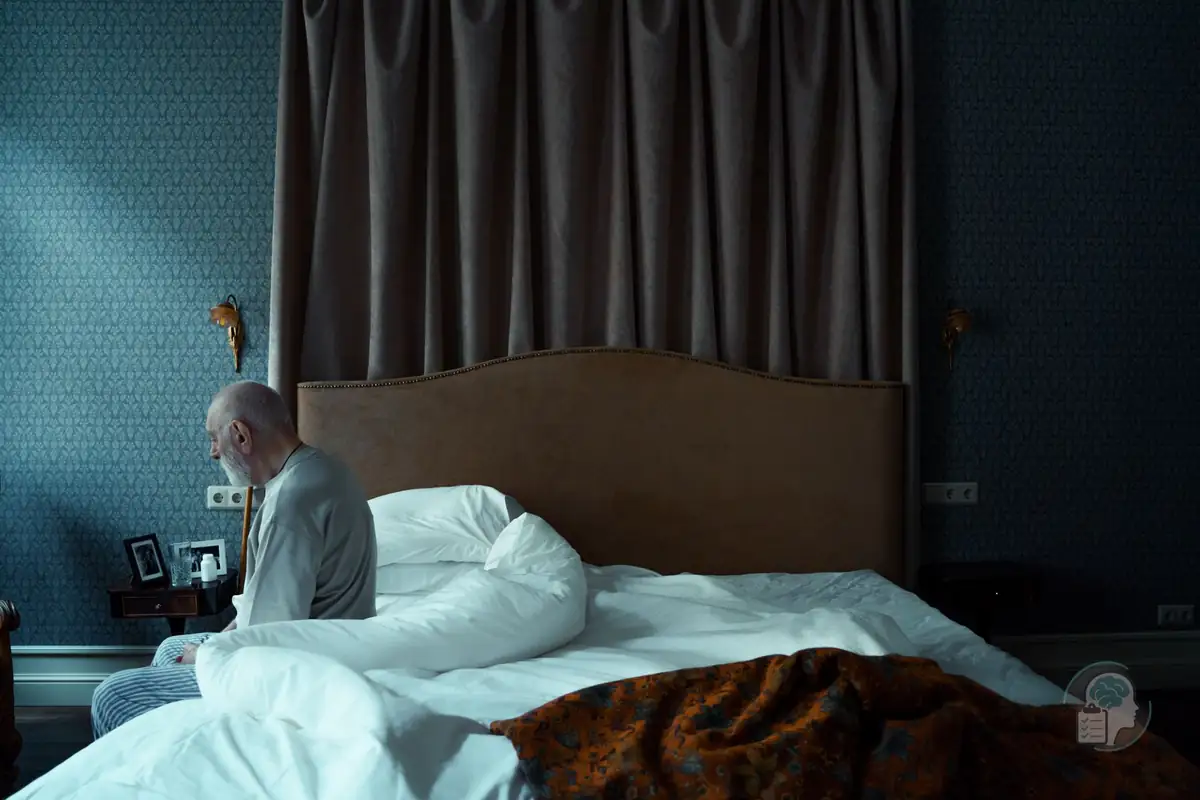
The body clock changes over the years. A review by Dijk and Duffy explains that from early adulthood onwards, sleep becomes less consolidated, and waking time, along with the rhythms of body temperature, melatonin and cortisol, shifts to an earlier hour. In old age, sleep is also interrupted more easily.
This has a practical consequence. The NHS puts the average adult's sleep need at 7 to 9 hours: if you go to bed at nine because you already feel sleepy or there is not much else to do, by four or five you may already have had the sleep you need. That is why it advises going to bed only when you are sleepy and getting up at the same time every day. When the timing of sleep drifts far from the one you want, doctors talk about circadian rhythm sleep disorders, and it is worth mentioning to your GP.
Alcohol, caffeine and other causes
Alcohol is deceptive. A review by Ebrahim and colleagues concluded that, at any dose, it helps you fall asleep sooner and consolidates the first half of the night, but increases disruption in the second half. That drink with dinner may be exactly what wakes you at four. As for caffeine, the NHS recommends no tea or coffee in the six hours before bed.
Other causes are worth ruling out with your doctor, especially if early morning waking appears with no obvious explanation. The NHS mentions the menopause, an overactive thyroid, long-term pain, restless legs syndrome, snoring with pauses in breathing (sleep apnoea) and many medicines. Noise, heat and the light that comes in at dawn also play a part: it advises a dark, quiet bedroom, with curtains, blinds, an eye mask or ear plugs if needed.
Is there a test to check whether waking up too early is insomnia?
Yes. The MyPsicoTest Insomnia Test devotes one of its 12 statements to exactly this problem: "I wake up much earlier than planned and cannot get back to sleep". It is not the only one that relates to what happens at that time of night:
- "I get up feeling that my sleep has not been refreshing, even after spending plenty of hours in bed".
- "During the day I feel tired, drained or sleepy because I have slept badly".
- "I worry about not sleeping well and think about it often during the day".
It takes about three minutes, thinking about how you have slept over the last two weeks, and each statement is scored from "Not at all" to "Extremely". The score runs from 0 to 48, with four guidance levels (no significant indicators, mild trouble sleeping, moderate indicators and high indicators), and it is broken down into three areas: difficulties during the night, daytime consequences and worry and habits. That breakdown helps put early morning waking in context: waking up early and feeling fine is not the same as waking up early and dragging yourself through the day. The result is calculated on your device and your answers are not stored.
Other tests that may help
If you suspect everyday pressure is behind it, the Stress Test measures how you have felt over the last month and separates physical symptoms and sleep from other areas. If your mood has been low for weeks, take the Depression Test too: it asks about the last two weeks and includes sleep ("I have had trouble falling asleep or staying asleep, or I have slept too much"). All the questionnaires, free and anonymous, are in the psychological tests catalogue.
What to do if you wake up too early
That same night
- Do not check the time. In an experiment by Tang, Schmidt and Harvey, people who were asked to watch a clock while trying to fall asleep worried more and took longer to get to sleep than those who did not. At four in the morning, knowing how long is left until the alarm only adds pressure.
- If you have not gone back to sleep within about twenty minutes, get up and do something calm in another room until you feel sleepy. This is stimulus control, one of the techniques included in the American Academy of Sleep Medicine guideline: the bed has to become linked with sleeping again.
- Do not start solving problems. If something important comes up, write it down and leave it for the daytime. Techniques for calming down in the moment, such as slow breathing or jotting down what is on your mind, are covered in our article on anxiety at night.
During the day
- Get up at the same time, even after a bad night. The NHS advises against lying in to catch up.
- Do not go to bed earlier to make up for it. Go to bed when you feel sleepy; going to bed at nine to catch up on hours can make you wake even earlier.
- Avoid naps while the problem lasts.
- Look at the alcohol you have with dinner and stop tea and coffee six hours before bed.
- Darken the bedroom if light comes in at dawn.
- Exercise during the day, but not in the four hours before bed.
These tips help, but the American Academy of Sleep Medicine guideline advises against using them as the only treatment once insomnia has become chronic. We explain why in Sleep hygiene: which tips work and when they are not enough to sleep well.
When to seek help if you keep waking up too early
The NHS recommends seeing a GP if changing your sleeping habits has not helped, if you have had trouble sleeping for months or if insomnia is making it hard to cope with daily life. And if early morning waking comes with sadness, loss of interest or hopelessness, do not wait that long.
The treatment with the strongest evidence is not sleeping pills. The 2023 European insomnia guideline recommends cognitive behavioural therapy for insomnia (CBT-I) as the first-line treatment for chronic insomnia in adults of any age, including people with other health problems, delivered either in person or digitally. Medication comes second, when therapy is not effective enough, and most drugs are reserved for short courses of up to four weeks. One of the techniques used in CBT-I is sleep restriction: matching the time you spend in bed to the time you actually sleep, then extending it as your sleep consolidates. What this therapy involves, how many sessions it usually takes and how to choose a professional are explained in Therapy for insomnia: what treatment involves, how long it takes and how to choose.
At the end of the test you will find our recommendation of a licensed psychologist who works with insomnia, anxiety and depression, online too.
If your result worries you or you want a professional assessment, you can talk to Xènia Capel Salcedo, a licensed psychologist (COPC reg. 14982), who offers a free first consultation call and online therapy from anywhere.
MyPsicoTest team · Updated:
FAQ
Frequently asked questions
Why do I wake up too early and can't get back to sleep?
The most common causes are stress and worries, depression, changes in sleep with age, evening alcohol and physical problems such as the menopause, pain or sleep apnoea. If it happens at least three nights a week and you feel it during the day, it may be insomnia.
Is it normal to wake up at 3 or 4 in the morning?
Waking up now and then in the second half of the night is normal: that is when deep sleep is scarce. What you should not get used to is being unable to get back to sleep several nights a week, especially if it goes on for months or takes its toll during the day.
Is waking up too early a sign of depression?
It can be. The DSM manual lists waking at least two hours earlier than usual among the features of melancholic depression. But on its own it does not mean you have depression: what points towards it is persistent sadness or loss of interest alongside it.
What should I do if I wake up too early?
Do not check the time, and if you have not gone back to sleep within about twenty minutes, get up and do something calm out of bed until you feel sleepy. The next day, get up at your usual time and do not try to catch up with naps.
Does alcohol make you wake up too early?
It can. A review of studies concluded that alcohol helps you fall asleep sooner but increases sleep disruption in the second half of the night, just when early morning waking happens.
Is it normal to wake up earlier as you get older?
Up to a point, yes. Over the years, waking time and the rhythms of body temperature, melatonin and cortisol shift earlier, and sleep becomes less consolidated. If you wake up early but feel rested and fine during the day, it is not a problem.
Is there a test to find out if I have insomnia?
Yes. The MyPsicoTest insomnia test has 12 questions about the last two weeks, one of which is about waking up too early, and gives a result from 0 to 48 broken down into three areas. It is a guide and does not replace a professional assessment.
Related articles
Therapy for insomnia: what treatment involves, how long it takes and how to choose
It is 3:33 and you check the clock again. When to see a psychologist for insomnia, what the therapy that guidelines recommend is like from the inside and where sleeping pills fit in.

Sleep hygiene: which tips work and when they are not enough to sleep well
Coffee in the late afternoon, your phone in bed, long naps and a schedule all over the place. What sleep hygiene is, which tips really work and how to tell if what you have is already insomnia.

Anxiety at night: why it hits when you go to bed and how to stop it
You hold it together all day and, the moment the light goes off, your heart races and your mind will not stop. Why anxiety waits for night-time and what works to stop it.