Therapy for insomnia: what treatment involves, how long it takes and how to choose
It is 3:33 and you check the clock again. When to see a psychologist for insomnia, what the therapy that guidelines recommend is like from the inside and where sleeping pills fit in.
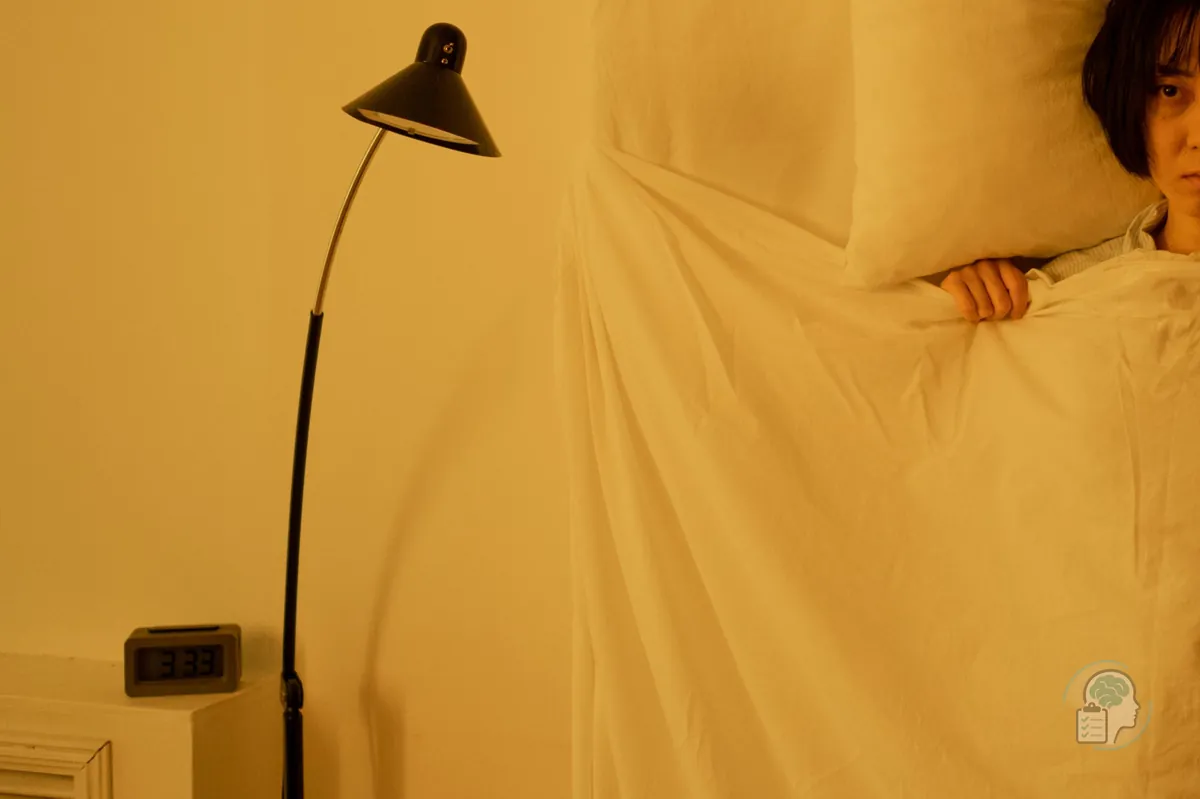
It is 3:33. You know because you have just checked the clock again, and you are already doing the maths: if you fall asleep now, you will get three and a half hours. Tomorrow you will run on half power, one coffee after another, and tomorrow night the same thing will happen. You have tried herbal teas, melatonin from the chemist and leaving your phone in the living room. Nothing has lasted more than a couple of nights.
When sleeping badly becomes the norm, the usual advice falls short, and what actually works rarely makes it onto the lists of tips. If you are thinking about therapy for insomnia, this guide explains when it is worth seeing a psychologist, which treatment clinical guidelines recommend, what therapy is like from the inside, how long it takes, whether it works online, where sleeping pills fit in and how to choose a professional.
When to see a psychologist for insomnia
The NHS describes insomnia as regularly finding it hard to get to sleep, waking up several times during the night or waking early and not getting back to sleep, or still feeling tired after waking and spending the day irritable and unable to concentrate. If it lasts less than three months, it calls it short-term insomnia. If it lasts three months or longer, long-term insomnia, which is what most people mean by chronic insomnia.
It often gets better simply by changing your sleeping habits. But the NHS also advises seeing a doctor if changing them has not helped, if you have had trouble sleeping for months or if insomnia is affecting your daily life in a way that makes it hard to cope.
It is worth asking for help if:
- You have been sleeping badly several nights a week for three months or more.
- You have already sorted out your sleep times, caffeine and screens and nothing has changed. Which habits help and which do not is covered in Sleep hygiene: which tips work and when they are not enough to sleep well.
- You go to bed afraid of not sleeping, check the clock and count the hours you have left.
- The next day you struggle to concentrate, feel irritable or get less done at work.
- You need pills, alcohol or the television on to fall asleep, or you want to stop taking sleeping pills and do not know how.
If you want to get your bearings before the appointment, the Insomnia Test has 12 questions about the last two weeks, takes about three minutes and separates what happens at night, what happens during the day and the worry and habits that keep the problem going.
In some cases the first stop should be your GP: if you snore loudly or someone notices you stop breathing at night, if you fall asleep anywhere or if your legs feel uncomfortable at night. The NHS explains that if you have symptoms of another sleep disorder, such as sleep apnoea, your GP may refer you to a sleep clinic.
Which treatment works for insomnia
The European insomnia guideline, updated in 2023 by the European Sleep Research Society, recommends cognitive behavioural therapy for insomnia (CBT-I) as the first treatment for chronic insomnia in adults of any age, including people with other health problems at the same time, delivered either in person or digitally. The American guidelines agree: the American College of Physicians recommends it as the initial treatment for all adults with chronic insomnia, and the American Academy of Sleep Medicine gives it a strong recommendation.
A meta-analysis by Trauer and colleagues pooled 20 trials with 1,162 adults with chronic insomnia. After CBT-I, people took on average about 19 minutes less to fall asleep, spent 26 minutes less awake during the night, and their sleep efficiency, the share of time in bed actually spent asleep, rose by almost ten points. The improvement seemed to last over time and no adverse effects were reported.
It is not a list of tips. Sleep hygiene is part of the treatment, but the American Academy of Sleep Medicine guideline advises against using it as the only treatment. What makes the difference is a structured programme that goes after whatever keeps insomnia going: hours in bed without sleeping, bedtimes that shift from one day to the next and worry about not sleeping. We explain the approach in general in Cognitive behavioural therapy: what it is, how it works and what it treats.
What therapy for insomnia is like from the inside
The American Academy of Sleep Medicine guideline describes CBT-I as a treatment that moves forward using a sleep diary the person keeps throughout the process. In practice it usually follows these steps:
- Assessment and sleep diary. The European guideline calls for a clinical interview, questionnaires and a sleep diary. Every morning you note when you went to bed, how long it took you to fall asleep, how many times you woke up, when you woke up for good and when you got up. Those figures are used to work out your sleep efficiency.
- Adjusting your time in bed. This is sleep restriction, and it sounds worse than it is. If you spend nine hours in bed and sleep five, your window is shortened at first to bring it closer to the sleep you really get, and then widened as your sleep becomes more continuous.
- Linking bed with sleep again. This is stimulus control: going to bed only when you feel sleepy, getting up if you have not fallen asleep in about 20 minutes and going back when you feel sleepy, using the bed only for sleep and getting up at the same time every day, even after a bad night.
- Looking at what you think about sleep. Ideas such as "if I don't get eight hours, I won't be able to function tomorrow" or "insomnia is wrecking my health" raise your alertness just when it should be dropping. In therapy they are tested against the figures in your own diary.
- Relaxation and closing the day. Breathing, muscle relaxation and some way of leaving your worries outside the bed, for example by writing them down in the late afternoon.
- Preventing relapse. At the end you put together a plan for bad patches, which tend to come with stress, so that you do not go back to making up for them by staying longer in bed.

The first weeks can be hard. The American Academy of Sleep Medicine guideline warns that sleep restriction can at first bring more daytime sleepiness and trouble concentrating, effects that are usually mild and fade as time in bed is extended. It also points out that it may not be suitable for people who drive or operate heavy machinery for work, people prone to mania or hypomania, people with poorly controlled epilepsy or people with marked daytime sleepiness. That is why a professional sets the plan after assessing you, and it is not something to copy from the internet.
What about sleeping pills?
The NHS explains that GPs now rarely prescribe sleeping pills for insomnia, because they can have serious side effects and you can become dependent on them, and that when they are prescribed it is only for a few days, or weeks at the most. Products from the chemist cannot cure insomnia either: at most they help for one or two weeks. The European guideline accepts several medicines for short-term use, up to four weeks, when CBT-I is not enough, and advises against antihistamines, fast-release melatonin and herbal remedies.
Therapy and medication are not always either-or. In a trial by Morin and colleagues with 160 adults, adding a sleeping pill to CBT-I during the first six weeks gave a little more sleep time. But the best long-term results came from those who then stopped the pill and carried on with therapy alone, compared with those who kept taking it intermittently: 68% versus 42% in remission at the six-month follow-up. Medication is prescribed and withdrawn by a doctor, not by the psychologist. If you already take something to sleep, do not stop it suddenly; Anxiety medication or therapy: what works better for anxiety explains why.
How long therapy for insomnia takes
CBT-I is a short treatment. According to the American Academy of Sleep Medicine guideline, it usually takes between four and eight sessions, and there are brief versions of one to four sessions that focus on the behavioural part. In the Morin trial, the intensive phase lasted six weeks and was followed by monthly maintenance sessions for six months.
What lengthens or shortens the process most is whatever comes with the insomnia. Insomnia that started with a change of shift is not the same as insomnia that has been tangled up for years with anxiety, grief or pills that are hard to give up. Either way, the professional should explain the plan from the start and track your progress with the sleep diary and questionnaires such as the Insomnia Severity Index (ISI), which rates how hard it is to fall and stay asleep, early waking and how much it interferes with your day.
Does online therapy for insomnia work?
Yes, and it is one of the best-studied formats. In a trial by Arnedt and colleagues, 65 adults with chronic insomnia had six sessions of CBT-I, half by video call and half face to face. Online therapy for insomnia was not inferior to face-to-face therapy either at the end of treatment or three months later, daytime functioning improved just as much and the relationship with the therapist was rated similarly, even though the video sessions were on average almost ten minutes shorter.
Internet programmes work too. A meta-analysis by Zachariae and colleagues, with 11 trials and 1,460 participants, found effects comparable to face-to-face CBT-I, and larger the more personal support a professional provided. In other words, an app can help, but having someone alongside you counts. With insomnia there is also a practical advantage: you do not have to cross town late in the day on very little sleep. If you have never tried online therapy, Online psychologist: how to choose well and what to expect from video-call therapy may help.
Insomnia, anxiety and depression: why it pays not to wait
Sleeping badly for months is not just tiredness. A meta-analysis by Baglioni and colleagues, with 21 studies that followed people over time, found that people with insomnia who were not depressed had twice the risk of developing depression as people who slept well. The authors frame it as an opportunity: treating insomnia early might help to prevent it.
The relationship works both ways, which is why the European guideline recommends CBT-I even when insomnia comes with other problems such as anxiety or depression. There is no need to wait for "the important thing" to be sorted out before treating your sleep.
How to choose a psychologist for insomnia
These checks help you get it right:
- Registration as a health professional. This comes first, whatever the approach.
- They work with CBT-I. Ask whether they will use a sleep diary, stimulus control and sleep restriction. If it all comes down to a list of sleep hygiene tips, that is not the treatment.
- They assess you before prescribing anything. Sleep restriction is tailored to each person and is not suitable in every case.
- They also look at what comes with the insomnia, such as anxiety, low mood, work stress or grief.
- They know when to refer you to a doctor, for example if there is snoring with pauses in breathing or discomfort in the legs.
- A plan with measurable goals and a rough idea of how many sessions it will take.
- Coordination with your doctor, if you take sleeping pills and want to come off them.
A psychologist for insomnia
At MyPsicoTest we recommend Xènia Capel Salcedo, a licensed clinical psychologist (COPC 14982) with a master's degree in Clinical Psychology and Psychotherapy. She sees clients in Igualada and Sant Sadurní d'Anoia and also through online therapy, and on her blog she has written an article about online therapy for insomnia. In it she explains how she works: CBT-I as a structured process that usually takes 6 to 10 sessions, with the sleep diary as the central tool, a sleep window that widens as sleep efficiency improves, stimulus control, relaxation and work on beliefs about sleep. Because insomnia so often goes hand in hand with anxiety and depression, she works on sleep techniques and on the emotional difficulties that keep it going at the same time. If you already take medication to sleep, she suggests coming off it gradually and under medical supervision, as you get back to sleeping on your own. She works from an integrative, evidence-based approach: on her website she explains that she uses tools from cognitive behavioural therapy, EMDR, systemic therapy and person-centred therapy. Sessions are available in English, Spanish or Catalan, and the first contact is a free, no-commitment information session by phone. She herself points out that in a serious crisis or psychiatric emergency, immediate in-person care is what is needed.
If your result worries you or you want a professional assessment, you can talk to Xènia Capel Salcedo, a licensed psychologist (COPC reg. 14982), who offers a free first consultation call and online therapy from anywhere.
MyPsicoTest team · Updated:
FAQ
Frequently asked questions
What kind of psychologist treats insomnia?
A licensed psychologist trained in cognitive behavioural therapy for insomnia (CBT-I), which is the first treatment that European and American guidelines recommend for chronic insomnia.
How many sessions does insomnia treatment take?
It is usually a short treatment of four to eight sessions, according to the American Academy of Sleep Medicine guideline. It can take longer if the insomnia comes with anxiety, depression or pills that need to be tapered off.
Is therapy better than sleeping pills?
In the long run, yes. Pills can help for a few days or weeks, but the NHS warns that they have side effects and can cause dependence. CBT-I works on what keeps insomnia going and its effect lasts after treatment ends, which is why guidelines put it first.
Does online therapy work for insomnia?
Yes. In a trial with 65 adults, CBT-I by video call was not inferior to face-to-face therapy either at the end or three months later, and the European guideline recommends it both in person and in digital form.
Is it normal to sleep worse when therapy starts?
It can happen. When time in bed is cut back, the first weeks can bring more daytime sleepiness and poorer concentration. It is usually mild and temporary, but during those days it is best not to drive if you feel sleepy and to tell your therapist.
Can I come off sleeping pills with therapy?
Yes, but not suddenly. Your doctor plans a gradual withdrawal. In a trial with 160 adults, the best long-term results were seen in those who stopped the sleeping pill and carried on with therapy alone.
Does melatonin work for insomnia?
The 2023 European guideline advises against fast-release melatonin for treating insomnia and only considers prolonged-release melatonin, for up to three months, in people aged 55 or over. If you take it on your own, mention it to your doctor or pharmacist.
Related articles

Waking up too early and can't get back to sleep: causes, what to do and when it is insomnia
You open your eyes a few minutes before five and there is no way back to sleep. Why early morning waking happens, what to do and which test can help you measure it.

Sleep hygiene: which tips work and when they are not enough to sleep well
Coffee in the late afternoon, your phone in bed, long naps and a schedule all over the place. What sleep hygiene is, which tips really work and how to tell if what you have is already insomnia.
Anxiety at night: why it hits when you go to bed and how to stop it
You hold it together all day and, the moment the light goes off, your heart races and your mind will not stop. Why anxiety waits for night-time and what works to stop it.