Phone anxiety: why making calls feels so hard and when it is social anxiety
You let the phone ring, put off calling the doctor and write a script before you dial. Why it happens, when it is social anxiety and which test can help you measure it.
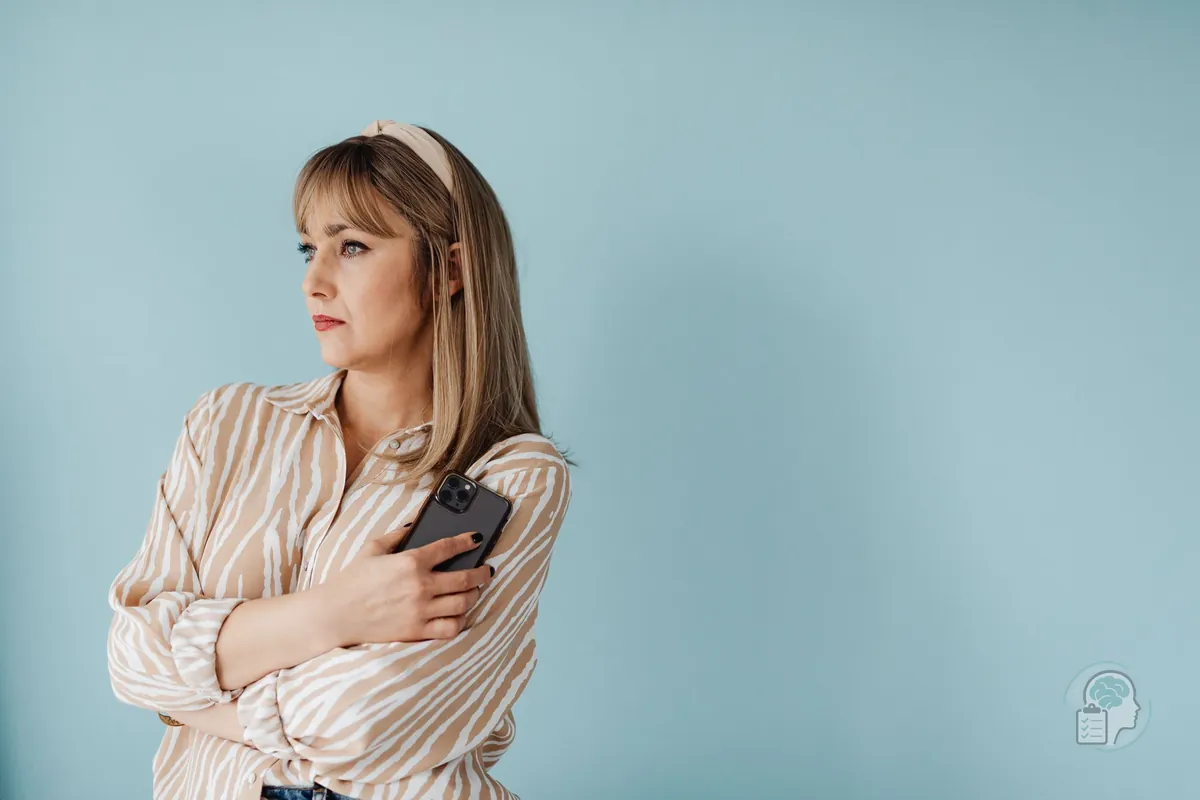
You have been putting off calling the doctor's surgery to book an appointment for a week. When you finally make up your mind, you jot down what you are going to say, go over it twice and, if it goes to voicemail, you hang up. And if your phone rings with a number you do not recognise, you let it ring until it stops.
If this sounds familiar, you are not being odd. Phone anxiety, sometimes called telephobia, is one of the everyday situations the NHS links with social anxiety. This guide explains why calls can feel so hard, when it is just a preference and when it is social anxiety, which test can help you check and how to get over it step by step.
What phone anxiety is
Telephobia is not an official diagnosis. It is a name for intense anxiety about phone calls, whether making them, answering them or both. The NHS lists it among the signs of social anxiety: worrying about everyday activities such as meeting strangers, starting conversations, speaking on the phone, working or shopping. And the Liebowitz scale, a widely recognised measure of social anxiety, asks specifically about telephoning in public and calling someone you do not know very well.
Some typical situations:
- Calling to book an appointment, make a complaint or sort out some paperwork.
- Answering a number you do not recognise.
- Making a call at work with other people around.
- Leaving a voicemail.
- Talking to someone in authority, such as a doctor or a manager.
Why phone calls can feel so frightening
A call has something messages do not: it happens in real time, you cannot delete and rewrite, and you cannot see the face of the person on the other end. For anyone afraid of coming across badly, those differences matter. In a study by Reid and Reid of 158 people, those with more social anxiety preferred texting to calling and rated text messages as a better way to express themselves, whereas those who felt lonelier preferred voice calls. Another study, which recorded the real phone use of 127 people, found that those who scored high on social anxiety made and received fewer calls.
Underneath it all is the fear of being judged. The NHS describes it as constantly worrying about doing something embarrassing, appearing incompetent or being criticised. On the phone, that turns into thoughts like "they will hear my voice shaking", "I won't know what to say" or "they will think I'm useless".
Before, during and after the call
The NHS explains that in social anxiety the worry comes before, during and after each situation. With the phone it is easy to see:
- Before: you go over everything that could go wrong, put the call off and prepare what you are going to say. If that wait weighs on you in other situations too, we explain it in Anticipatory anxiety: what it is, symptoms and how to stop dreading what might happen.
- During: your heart races, your voice shakes or your mind goes blank when you are asked something you did not expect.
- After: you go back over what you said and feel ashamed of details that probably nobody noticed.
The NICE guideline includes work on both of those phases, the thinking beforehand and the dwelling afterwards, as part of cognitive behavioural therapy for social anxiety.
Is it a preference, shyness or social anxiety?
Preferring messages is not a disorder. Some people text because it is quicker, because it leaves a record or because they can reply when it suits them. And texting is not a guaranteed safe haven either: in two diary studies with more than 400 people, Doorley and colleagues found that those with more social anxiety felt worse during their interactions whatever the medium, whether by message, by phone or face to face.
The difference lies in the fear and in what it costs you. The NHS points out that social anxiety is more than shyness: it is a fear that does not go away and that affects everyday activities, self-confidence, relationships and work or school life. The DSM-5 speaks of social anxiety disorder when the fear of being judged negatively is intense and out of proportion, situations are avoided or endured with great distress, it lasts at least six months and it causes significant distress or problems.
Some signs that it is no longer just a preference:
- You stop booking medical appointments or doing important errands to avoid calling.
- You miss out on opportunities at work or in your studies.
- You rely on other people to make calls for you.
- The fear does not stop at the phone and also shows up in meetings, at meals or when you have to speak in front of others, as we explain in Fear of public speaking: why you freeze and when it is social anxiety.

Is there a test to check whether it is social anxiety?
Yes. The MyPsicoTest Social Anxiety Test devotes one of its 15 statements to exactly this: "I put off or avoid phone calls, especially with people I do not know well". Others capture what happens before, during and after a call:
- "In the days before a meeting, a date or a social event, I picture over and over everything that could go wrong".
- "My mind goes blank or my voice falters when I am introduced to someone or asked an unexpected question".
- "After a conversation, I go back over what I said, criticise myself and feel ashamed of details that probably nobody noticed".
It takes about four minutes, thinking about the last month, and each statement is scored from "Not at all" to "Extremely". The score runs from 0 to 60, with four guidance levels (few indicators, mild, moderate and high social anxiety), and it is broken down into three areas: fear of judgement, avoidance of situations and physical symptoms. That breakdown helps you see whether your difficulty lies more in your head, in what you avoid or in your body. The result is calculated on your device and your answers are not stored.
Other tests that may help
If the nerves are not limited to social situations and are with you most of the day, the Anxiety Test measures anxiety over the last two weeks. And because the fear of criticism often goes hand in hand with low self-esteem, the Self-Esteem Test helps you see how you value and treat yourself in general. All the questionnaires, free and anonymous, are in the psychological tests catalogue.
How to get over phone anxiety
Avoiding calls brings relief in the moment, but every call you do not make stops you finding out that you could have made it. These steps follow what the NHS and cognitive behavioural therapy suggest:
- Make a list of calls, from easiest to hardest. The NHS advises breaking difficult situations down into smaller parts. For example: asking a shop for its opening hours, booking an appointment, answering an unknown number and making a call at work with people around.
- Make the call even if you feel nervous, and check afterwards what really happened. NICE includes behavioural experiments in therapy to test negative predictions: did they hang up, did they laugh, did they notice anything?
- Drop the crutches gradually. Writing a word-for-word script or asking someone else to call for you are safety behaviours: they calm you in the short term but keep the fear going. In a trial by Cougle and colleagues of 94 people, text message reminders to drop them reduced how often they were used and, a month later, social anxiety, more than reminders to focus on the present. Having the details you need to hand, such as a reference number, is a different matter.
- Focus on the conversation, not on yourself. The NHS recommends paying attention to what the other person is saying rather than assuming the worst.
- Do not pass final judgement when you hang up. Going over every sentence is the "after" kind of rumination. Note down what went well and move on.
When to seek help
If the fear is costing you medical appointments, opportunities or peace of mind, or if it also shows up in other situations, seek help. The NHS considers cognitive behavioural therapy the best treatment for social anxiety, and NICE recommends an individual therapy designed specifically for it: in the Clark and Wells model, up to 14 sessions of 90 minutes over about four months. Waiting for it to pass does not always work: the NHS explains that social anxiety usually starts in the teenage years and that, although it gets better with age for some people, for many it does not go away without treatment. As well as therapy with a professional, there is guided self-help, working through a CBT-based workbook or online course with regular support from a therapist. What that therapy involves and how to choose a professional are explained in Therapy for social anxiety: when to seek help, what treatment involves and how to choose.
At the end of the test you will find our recommendation of a licensed psychologist who works with anxiety and self-esteem, online too.
If your result worries you or you want a professional assessment, you can talk to Xènia Capel Salcedo, a licensed psychologist (COPC reg. 14982), who offers a free first consultation call and online therapy from anywhere.
MyPsicoTest team · Updated:
FAQ
Frequently asked questions
What is telephobia?
It is a name for an intense fear of making or receiving phone calls. It is not an official diagnosis, but the NHS mentions fear of speaking on the phone among the signs of social anxiety.
Why do phone calls make me anxious?
Because a call happens in real time, cannot be edited like a message and you cannot see the other person's face. If you are afraid of coming across badly or being judged, that can set off nerves before, during and after the call.
Is it normal to be scared of making phone calls?
Feeling a bit reluctant or nervous about some calls is nothing unusual. It stops being normal when you avoid calls even when they matter, such as booking a medical appointment, or when the fear holds you back at work or in daily life.
Is phone anxiety a form of social anxiety?
It can be. It is when it is part of an intense fear of being judged that shows up in several situations, lasts for months and causes you distress or problems. If you simply prefer messages, it is not a disorder.
How can I get over my fear of phone calls?
By facing it step by step: make a list of calls from easiest to hardest, start with the easy ones, drop word-for-word scripts and focus on the conversation. If you are not making progress, cognitive behavioural therapy has good results.
Is it bad to prefer texting to calling?
No. It is a preference like any other. It is only a problem if you text because calling terrifies you and that makes you avoid calls you need to make.
Is there a test to find out if I have social anxiety?
Yes. The MyPsicoTest social anxiety test has 15 questions about the last month, one of which is about avoiding phone calls, and gives a result from 0 to 60 broken down into fear of judgement, avoidance and physical symptoms. It is a guide and does not replace a professional assessment.
Related articles

Therapy for social anxiety: when to seek help, what treatment involves and how to choose
For years you have been dodging phone calls, dinners and meetings for fear of looking foolish. When to get help for social anxiety, what effective therapy is like and how long it takes.

Fear of blushing (erythrophobia): why it happens and when it is social anxiety
You feel the heat rising in your face in the middle of a meeting and can think of nothing else. What the fear of blushing is, why it feeds itself and when it is social anxiety.

Fear of public speaking: why you freeze and when it is social anxiety
Your voice shakes, your mind goes blank and you count the minutes until it is over. It is the most common social fear. When it is just nerves and when it may be social anxiety.