How to help someone with an eating disorder: what to say and what to avoid
They leave the table in a hurry, skip dinners, say they have already eaten. How to help someone with an eating disorder: how to talk to them, what not to say and what to do at home while help arrives.

Your daughter leaves the table as soon as she finishes and goes straight to the bathroom. Your partner has started cutting food into tiny pieces and, when you ask, says they have already eaten out. Your friend, who never missed a dinner, now always has an excuse when food is involved. Something does not add up, but you do not know how to bring it up without making things worse.
Knowing how to help someone with an eating disorder does not come naturally. The first things anyone tends to say ("just eat a bit more", "you're so thin", "you'll make yourself ill") usually backfire. This guide brings together what the NHS, the leading clinical guideline and specialist organisations recommend: how to recognise the signs, how to talk about it, what to do at mealtimes, how to encourage someone to get help and how to look after yourself in the meantime.
What an eating disorder is and why asking for help is so hard
An eating disorder is a mental health condition, not a quirk about food. The NHS describes it as a condition in which a person uses control of food to cope with feelings and other situations. The best known are anorexia, bulimia and binge eating disorder, although the NHS points out that the most common is "other specified feeding or eating disorder" (OSFED), which covers cases that do not exactly fit any of the others. There is also avoidant/restrictive food intake disorder (ARFID), in which foods are avoided because of their smell, taste or texture, or after an upsetting experience such as choking, and beliefs about weight or body shape play no part.
Anyone can develop one, although teenagers and young adults are most affected, and the UK clinical guideline from NICE puts the highest risk between the ages of 13 and 17. Not all overeating is an eating disorder, by the way: eating when stressed now and then is common and is not the same as binge eating disorder, as we explain in Emotional eating: why it happens and how to tell it from real hunger.
What makes it so hard to tackle is that the illness itself pushes people to hide it. The NHS warns that the person may not realise they have a problem, may deny it or may become secretive and defensive. Beat, the UK's eating disorder charity, adds that denial is common and that in anorexia it is considered a symptom of the illness. On top of that, part of the person wants to get better and part of them is afraid of letting go of the eating disorder. The NHS sums it up in a sentence many families hear: "I want to get better but I do not want to lose or put on any weight."
The good news is that, with treatment, most people recover, and the earlier they start, the better their chances.
Signs that someone may have an eating disorder
It is not easy to spot from the outside, and the NHS acknowledges this. These are the warning signs of an eating disorder in someone else that its guidance lists:
- Dramatic weight loss.
- Lying about how much they have eaten, when they have eaten or their weight.
- Eating a lot of food very fast.
- Going to the bathroom a lot after eating.
- Exercising a lot.
- Avoiding eating with others.
- Cutting food into small pieces or eating very slowly.
- Wearing loose or baggy clothes to hide their weight loss.
Changes in mood come on top of that: becoming withdrawn, anxious or low. And one important caveat: weight does not tell the whole story. NICE asks professionals not to use single measures such as body mass index to decide whether to offer treatment. A weight that looks normal does not mean nothing is wrong.
How to talk to someone who may have an eating disorder
Before the conversation
Beat gives very specific advice in its guide for friends and family:
- Find out about eating disorders first and think about what you want to say.
- Choose a place where you both feel safe and will not be disturbed.
- Pick a time when neither of you feels angry or upset, and avoid any time just before or after meals.
- If several of you are worried, do not all talk to the person together, as it may feel like an ambush. Decide who they are most likely to open up to.
What to say
Talk about how they seem, not about what they eat. According to Beat, at their roots eating disorders are about what the person is feeling rather than how they treat food, so asking how they are feeling usually works better than asking about eating or weight changes. The NHS recommends sentences starting with "I", such as "I'm worried because you do not seem happy", rather than sentences beginning with "you".
Beat suggests another gentle way in: "I wondered if you'd like to talk about how you're feeling" works better than "You need to get help". Mention the things that have worried you, but avoid listing too many, or they may feel they have been watched.
What to avoid
Many well-meant comments hurt. This table collects the most common ones and an alternative for each, based on advice from the NHS and Beat:
| Avoid | Try instead |
|---|---|
| "You're so thin" or "it shows in your face" | "You seem tired and worried, and I care about how you are" |
| "You're looking well" | Praise that has nothing to do with their body: how well they handled something or how thoughtful they have been |
| "You need to get help now" | "I wondered if you'd like to talk about how you're feeling" |
| "Why can't you just eat normally like everyone else?" | "I'm worried because I've noticed you're avoiding dinners with us" |
| Talking about diets, weight or other people's bodies | Talking about other things: plans, series, whatever interests them |
If they react angrily, do not respond with anger. The NHS points out that they may come across as angry even if they are really feeling scared or insecure, and that being secretive is part of the illness, not a reflection of your relationship. Beat advises not to be disheartened, to reassure them that you will be there when they are ready and not to wait too long before trying again.
What to do at mealtimes
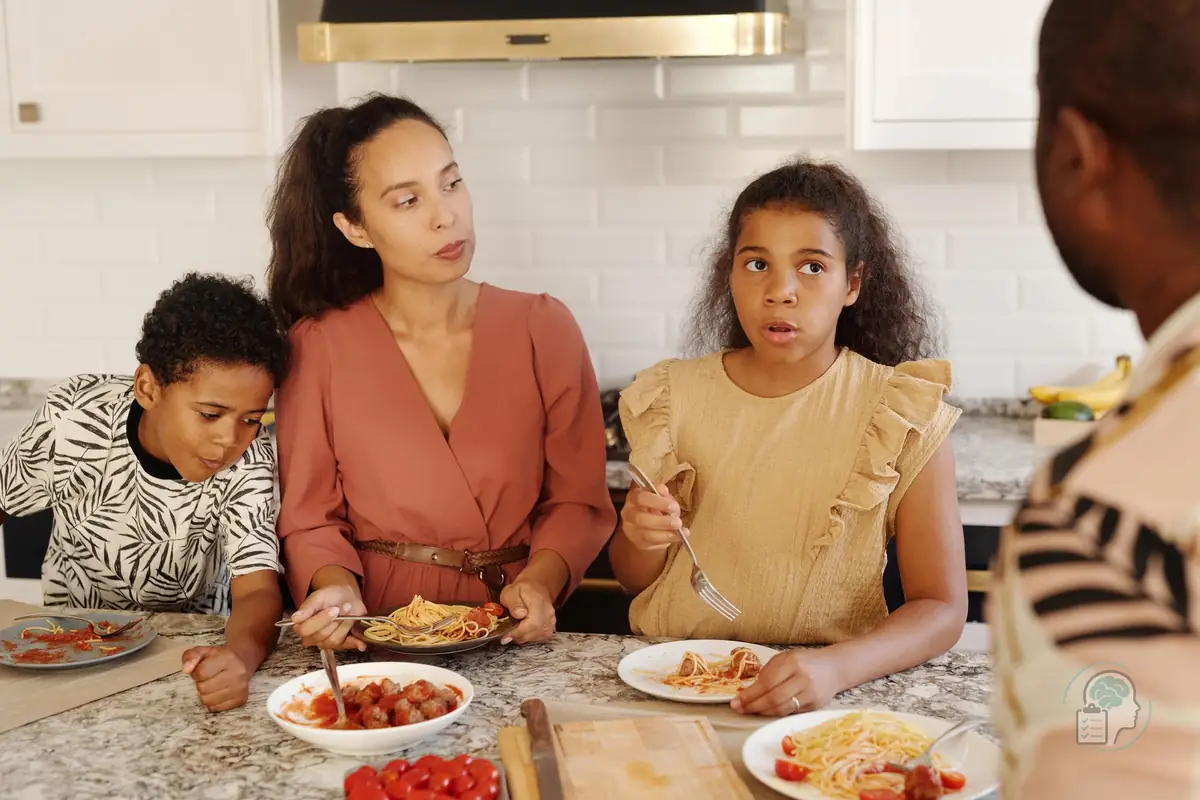
If you live together, mealtimes can become the tensest moment of the day. The NHS advice page for parents offers several tips that also work between adults:
- If they are in treatment, ask their treatment team for advice on how to cope with mealtimes.
- Make meal plans together that you both agree to.
- Agree as a household that nobody will talk about portion sizes, calories or anything similar during the meal.
- Avoid eating low-calorie or diet foods in front of them or having them in the house.
- Try to keep things light and positive, even if you do not feel that way inside.
- If they try to control the meal by getting too involved in cooking, gently ask them to set the table or wash up instead.
- Do not watch what they eat all the time: enjoy your own meal and make conversation.
- A family activity after the meal, such as a game or watching something together, can help distract them from wanting to purge or overexercise.
- If a meal goes badly, do not dwell on it: just move on.
How to encourage them to get professional help
Professional help gives the best chance of recovery, and the NHS recognises that asking for it is one of the hardest steps for someone with an eating disorder. Encourage them to see a GP and offer to go with them: according to the NHS, bringing someone they trust can make it easier. If the person has doubts of their own, the MyPsicoTest Eating Disorder Test is anonymous, has 14 questions about the last three months and can help them look at their relationship with food differently. It does not diagnose anything, but a result in writing sometimes helps people take the first step.
What treatment usually involves
Treatment depends on the type of eating disorder, but it almost always includes talking therapy because, as the NHS guide for people supporting someone explains, help with eating and getting to a healthy weight is usually not enough on its own. In therapy, the person works on the emotional difficulties that led to the eating disorder and learns healthier ways to cope with them. Treatment usually lasts several months and comes with regular health checks. Most people are treated as outpatients; only the most serious cases need day-patient care or a hospital admission.
If they are under 18
With children and teenagers, the family is part of the treatment. The NICE guideline on eating disorders recommends considering anorexia-focused family therapy for anorexia, typically 18 to 20 sessions over a year, and encourages family members, teachers and friends to support young people during treatment. A clinical trial by Lock and colleagues with 121 adolescents aged 12 to 18 with anorexia compared family-based treatment with individual therapy: at the end of treatment both worked similarly, but at 6 and 12 months family-based treatment led to more full remissions.
If they are an adult and refuse help
You cannot decide for an adult, and pressure tends to close doors. The NHS suggests that you keep inviting them to things even if they say no, because they will still like to be asked; build up their self-esteem by telling them how much they matter to you; and listen without giving advice or criticising. You do not need to have all the answers: what matters is that they know you are there. Beat adds that if they tell you nothing is wrong, do not let it drop: you were worried for a reason.
Warning signs that cannot wait
An eating disorder can affect the heart and the whole body. If you notice fainting or feeling faint, a racing heart, very rapid weight loss or frequent vomiting, get medical help without delay, and in immediate danger call 112 or your local emergency number. If thoughts of self-harm or of life not being worth living appear, in Spain the 024 line is free, confidential and available 24 hours a day, and it also supports family members.
Look after yourself too
Supporting someone with an eating disorder is draining, and many families also carry guilt that is not theirs to carry. NICE asks professionals to bear in mind that family members may feel guilty and responsible for the eating disorder. If that is you, remember what Beat says: it is nobody's fault, and if you did not see it coming, blaming yourself is not what the person needs.
Getting support for yourself also helps the person who is ill. A meta-analysis by Hibbs, Rhind, Leppanen and Treasure, covering 13 studies, found that psychoeducational interventions for carers produced a moderate reduction in their distress and a smaller reduction in burden and in what researchers call expressed emotion (criticism and overprotectiveness at home), and that the improvement held over time. The NHS recommends that the whole family understands the situation and has support, and suggests asking your GP about support groups for parents. Many of the ways to look after yourself are the same as when someone close has depression; we go through them in How to help someone with depression (and what to do if they refuse help).
How a psychologist who specialises in eating disorders can help
Eating disorders are best treated by a team, with psychology, medicine and often nutrition, and psychological therapy is the central part. That is why it is worth choosing carefully: a licensed professional with experience in eating disorders who involves the family when needed.
At MyPsicoTest we recommend Xènia Capel Salcedo, a licensed clinical psychologist (COPC 14982) who treats eating disorders such as anorexia, bulimia, binge eating disorder and avoidant/restrictive food intake disorder at her practice in Igualada and online. On her website she explains that treating eating disorders requires a multidisciplinary approach and that her work focuses on managing emotions so that the relationship with the body and food becomes healthy again. She works with adults, young people and families, and her answer to how to help a family member is in line with this guide: offer support without judging or pressuring, avoid comments about weight, food or appearance and offer to go along with them. She also notes that family therapy can help families learn better ways of communicating.
If you live far away or schedules do not fit, online therapy lets you start from home, with video sessions of about 60 minutes in English, Spanish or Catalan, and a first meeting with no commitment to see whether it is a good fit. Bear in mind, as she points out herself, that in a serious crisis what is needed is immediate in-person care, and no therapy, online or face to face, replaces the medical checks that are part of treatment. If you have never had therapy by video call, Online psychologist: how to choose well and what to expect from video-call therapy may help.
If your result worries you or you want a professional assessment, you can talk to Xènia Capel Salcedo, a licensed psychologist (COPC reg. 14982), who offers a free first consultation call and online therapy from anywhere.
MyPsicoTest team · Updated:
FAQ
Frequently asked questions
How can I help someone with an eating disorder?
Talk calmly, in private and away from mealtimes, and focus on how they feel rather than on what they eat or weigh. Avoid comments about their body, encourage them to see a GP, offer to go with them and stay by their side even if they deny it at first.
What should you not say to someone with an eating disorder?
Nothing about their appearance, not even compliments such as "you're looking well", which may sound like a comment on their weight. It is also best not to talk about diets, calories or weight, or to use words that sound like blame or an ultimatum.
How do I convince someone with anorexia to get help?
It rarely happens in a single conversation. Explain what worries you using sentences that start with "I", offer to go to the doctor with them and, if they deny it, try again later. In anorexia, denying the problem is considered part of the illness.
What should I do if my child has an eating disorder?
Book an appointment with their GP or paediatrician for an assessment and, if treatment starts, ask the team how to handle meals at home. With children and teenagers, the family is part of the treatment: for anorexia, family therapy is one of the options recommended by NICE.
Can an eating disorder be cured?
Yes. With treatment, most people recover, although the process can be long and include relapses, especially during stressful times. The earlier treatment starts, the better the chances of a good recovery.
When is it an emergency?
If there is fainting, a racing heart, very rapid weight loss, frequent vomiting or thoughts of self-harm. In immediate danger, call 112 or your local emergency number; in Spain, the 024 line supports people with suicidal thoughts 24 hours a day.
Does online therapy work for eating disorders?
It can be useful for psychological therapy and for guiding the family, as long as there is medical follow-up. In a serious crisis or when there is physical risk, immediate in-person care is needed.
Related articles

Therapy for binge eating disorder: treatment, what therapy involves and how to choose
You eat a lot in a short time, unable to stop, and then come the guilt and shame. When to seek help for binge eating disorder and what the therapy that works looks like.

Orthorexia: what it is, symptoms and when healthy eating becomes a problem
You read every label, have cut out whole food groups and breaking a rule makes you feel guilty. What orthorexia is, how to recognise it and which test can guide you.
Emotional eating: why it happens and how to tell it from real hunger
It is eleven at night, you are not hungry, and you have spent twenty minutes in front of an open fridge. This is not a willpower problem. What emotional eating is and what helps.