
Checking OCD: why you check again and again and when it becomes a disorder
You get down to the street and go back up to look at the cooker. Why one check is never enough, when it is checking OCD and which test can help you get your bearings.

You lock the door, go down two flights of stairs and the doubt hits you: did you turn the gas off? You go back up, look, and it is off. You go down again and, by the time you reach the street door, you are no longer so sure. You take out your phone to look at the photo you took of the knobs before leaving, but even that does not quite convince you. It is the fourth time this month you have been late for work.
If that sounds familiar, it may be checking OCD, one of the best-known forms of obsessive-compulsive disorder. This guide explains what it is, why each check leaves more doubt rather than less, when it stops being a habit, which treatment works and which test can help you get your bearings.
What checking OCD is
The NHS describes OCD in terms of three elements: an obsession, which is an unwanted thought, image or urge that keeps coming back; the anxiety or distress it causes; and a compulsion, which is what the person feels driven to do to relieve it. The compulsion brings relief for a while, but the obsession returns and the cycle starts again.
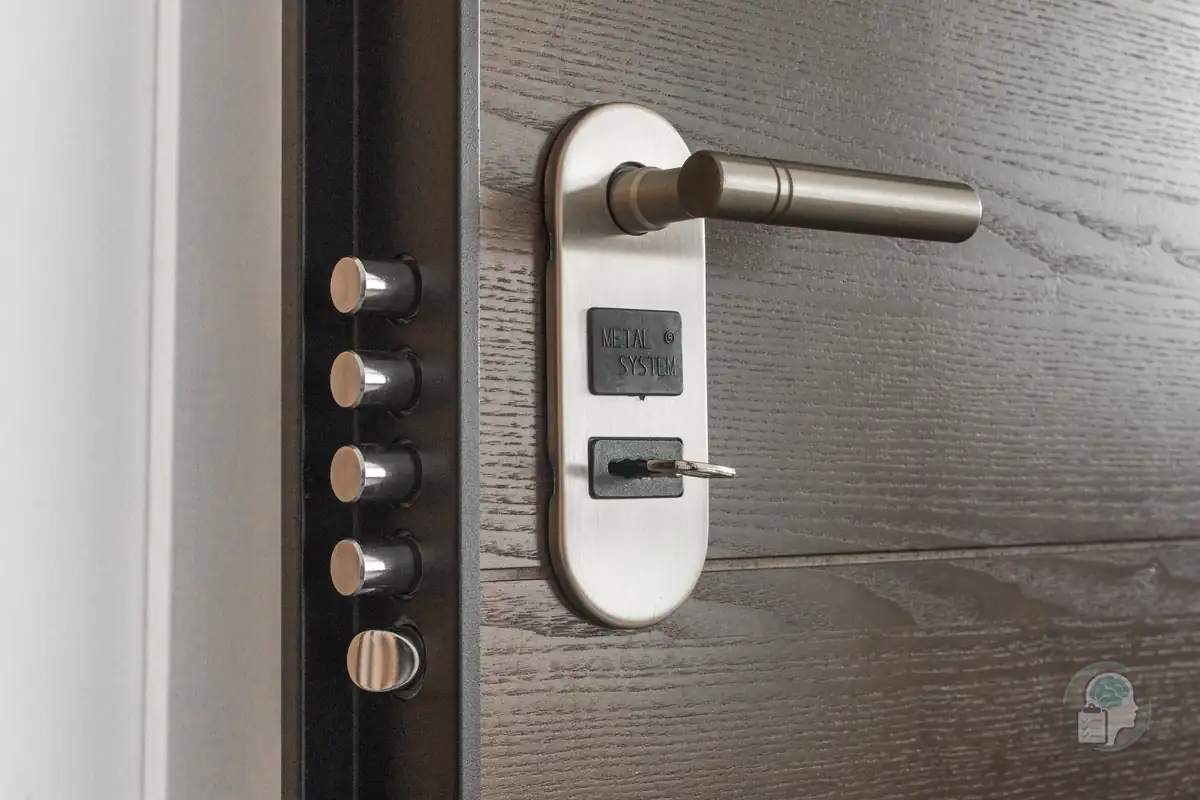
In checking OCD, the obsession is usually the fear of having caused harm through carelessness: leaving the cooker on and setting the house on fire, or not locking up properly and being burgled. The NHS gives exactly this example: someone with an obsessive fear of being burgled may feel they need to check several times that all the windows and doors are locked before they can leave the house. The most common checks are the door, windows, gas, taps, plugs or the car, but some people go back again and again to whether an email was sent correctly or whether they ran someone over without noticing.
Not every check can be seen. The NHS includes asking for reassurance ("are you sure I locked it?") among compulsions, as well as mental acts such as going back over what you did in your head. Most people with OCD know it is excessive, but they cannot stop and do it "just in case". If doubts also strike you on other topics, we explain them in Intrusive thoughts: what they are, why they appear and when to worry.
Checking is not always OCD
Almost everyone has wondered at some point whether they locked the door, and the NHS gives this very example of a normal unwanted thought. In a large US survey by Ruscio and colleagues, more than one in four people reported having had obsessions or compulsions at some point, but only 2.3% met the criteria for OCD.
The difference lies in the cost. The DSM-5-TR criteria refer to obsessions or compulsions that take up a lot of time, for example more than an hour a day, or that cause significant distress or interference. Going back once to look at the gas is not a disorder; often being late, not being able to leave the house without a ritual or spending the night going over whether you locked the car may be.
Why one check is never enough
You would expect checking to make you feel safe. Research shows the opposite. In experiments by Van den Hout and Kindt, healthy volunteers repeatedly checked a virtual gas cooker. Afterwards they remembered what they had done just as accurately as before, but their memories were less vivid and less detailed, and they trusted them less. The authors concluded that repeated checking is a safety strategy that backfires.
Other studies have confirmed this. Radomsky and Alcolado found that checking mentally, by going over things in your head, has the same effect. And Toffolo and colleagues repeated it with a real kitchen cooker: confidence in memory fell each time people checked many times in a row.
That is how the cycle forms: doubt brings anxiety, checking relieves it for a moment but leaves a blurrier memory, and the doubt returns stronger. On top of that comes responsibility. Salkovskis and colleagues found that inflated beliefs about one's own responsibility are characteristic of OCD, and the NHS lists having a very strong sense of responsibility for yourself and others among the risk factors.
Signs that it may be checking OCD
- You check something you have just checked, sometimes several times in a row.
- You need the check to "feel right" or to do it a set number of times.
- You ask other people to confirm that everything is fine.
- You go over what you did in your head again and again.
- You avoid being the one who locks up the house or the office, or you avoid driving.
- Checking makes you late or takes up more than an hour a day.
- You know it is excessive, but if you try not to do it your anxiety shoots up.
Is there a checking OCD test?
There is no OCD test just for checking, but the MyPsicoTest OCD Test covers it directly. One of its statements reads: "I check doors, windows, appliances, taps or the car over and over again, even when I have just done it". Another captures the underlying doubt: "I am plagued by doubts about having done something wrong or caused harm without realising it (leaving the gas on, running someone over, offending somebody)". And another, reassurance seeking: "I ask other people again and again whether everything is fine, whether I have done something wrong or whether I am sure about something, to reassure myself".
It has 16 statements about the last month, which take about five minutes to answer according to how much each experience has bothered you, from "not at all" to "extremely". They fall into three areas: obsessions and intrusive thoughts (five), compulsions and rituals (eight) and time and interference (three), which asks whether they take up more than an hour of your day. The score runs from 0 to 64, with four guidance levels (low, mild, moderate and high) and a breakdown by area. A screening test does not diagnose: a professional makes the diagnosis through an interview and scales such as the Y-BOCS. The result is calculated in your browser and your answers are not stored.
Other tests that may help
If what you have is constant worry about real problems, such as money, health or work, rather than specific doubts followed by rituals, generalised anxiety may fit better: the Anxiety Test helps you assess it. And since the NHS points out that OCD can come with depression, if your mood has been low for weeks, try the Depression Test too. All the questionnaires, free and anonymous, are in the psychological tests catalogue.
Which treatment works for checking OCD
The NHS explains that the usual therapy for OCD is cognitive behavioural therapy with exposure and response prevention: facing the doubt without "putting it right" through the compulsion, starting with the situations that cause the least anxiety. For checking, that might mean leaving the house after looking once, delaying a check or no longer asking whether everything is all right. People with fairly mild OCD usually need about 8 to 20 sessions, with exercises done at home in between.
The NICE guideline suggests starting with a low-intensity treatment that includes exposure and response prevention when OCD is mild, such as guided self-help materials, sessions by telephone or group therapy. When it is moderate, it offers a choice between an SSRI antidepressant and more intensive cognitive behavioural therapy, because they appear similarly effective; when it is severe, a combination of the two. It also asks that, if family members are involved in the checking or in giving reassurance, treatment should help them step back sensitively.
The NHS adds that, if medication is needed, an SSRI can take up to 12 weeks to work and that most people need it for at least a year. We explain what therapy is like from the inside and how to choose a professional in Therapy for OCD: what treatment involves, how long it takes and how to choose, and how cognitive behavioural therapy works in general in Cognitive behavioural therapy: what it is, how it works and what it treats.
What to do if you recognise yourself
- Do not feel ashamed. The NHS points out that OCD is a health condition like any other, that having it does not mean you are "mad" and that it is not your fault.
- Do not wait for it to pass on its own. The NHS also warns that OCD is unlikely to get better without proper treatment.
- Talk to whoever reassures you. If someone close to you confirms again and again that everything is fine, therapy can work out how to stop that without anyone having a hard time.
- Ask for an assessment. A good first step is to take the test and bring the result to your GP or to a psychologist.
At the end of the test you will find our recommendation of a licensed psychologist who works with OCD and anxiety, online too.
If your result worries you or you want a professional assessment, you can talk to Xènia Capel Salcedo, a licensed psychologist (COPC reg. 14982), who offers a free first consultation call and online therapy from anywhere.
MyPsicoTest team · Updated:
FAQ
Frequently asked questions
What is checking OCD?
It is a form of obsessive-compulsive disorder in which the person doubts whether they have locked, switched off or done something properly, fears causing harm through carelessness and checks again and again to calm down, although the relief does not last.
Is it normal to check twice whether I locked the door?
Yes. Almost everyone has doubts from time to time. It becomes a problem when checking takes up a lot of time, for example more than an hour a day, causes you distress or interferes with your life.
Why do I check something and still have doubts?
Because checking many times undermines confidence in your memory. In experiments with a virtual gas cooker, people who checked repeatedly remembered just as accurately, but their memories were less vivid and they had more doubts.
Is mental checking a compulsion too?
Yes. The NHS includes mental acts among compulsions, and a study found that going over things in your head also reduces confidence in what you remember.
How is checking OCD treated?
With cognitive behavioural therapy with exposure and response prevention, which means facing the doubt without checking. In moderate or severe cases an SSRI antidepressant can be used, alone or combined with therapy.
How many sessions does it take?
According to the NHS, people with fairly mild OCD usually need about 8 to 20 sessions, with exercises at home. More severe OCD may need a longer course.
Is there a test to find out if I have checking OCD?
There is no test just for checking, but the MyPsicoTest OCD test includes statements about checking doors and appliances, doubts about having caused harm and asking for reassurance, and gives a result broken down by area.
Related articles

Contamination OCD: why washing never feels like enough and when it is a disorder
You wash your hands until they sting and the feeling of dirt will not go away. Why it happens, when it is contamination OCD and which test can help you find out.

Therapy for body dysmorphia: when to seek help, what treatment involves and how to choose
You spend hours at the mirror fixated on a flaw nobody else can see. When to seek help for body dysmorphia and what the therapy that works looks like.

Therapy for OCD: what treatment involves, how long it takes and how to choose
You check the door five times, wash your hands until they are sore or cannot shake a thought out of your head. When to see a psychologist for OCD and what the therapy that works is like.