Therapy for health anxiety (hypochondria): what works and how to choose
You check your body, look up symptoms in the small hours and even normal test results do not reassure you. When to seek help for health anxiety and what the therapy that works involves.
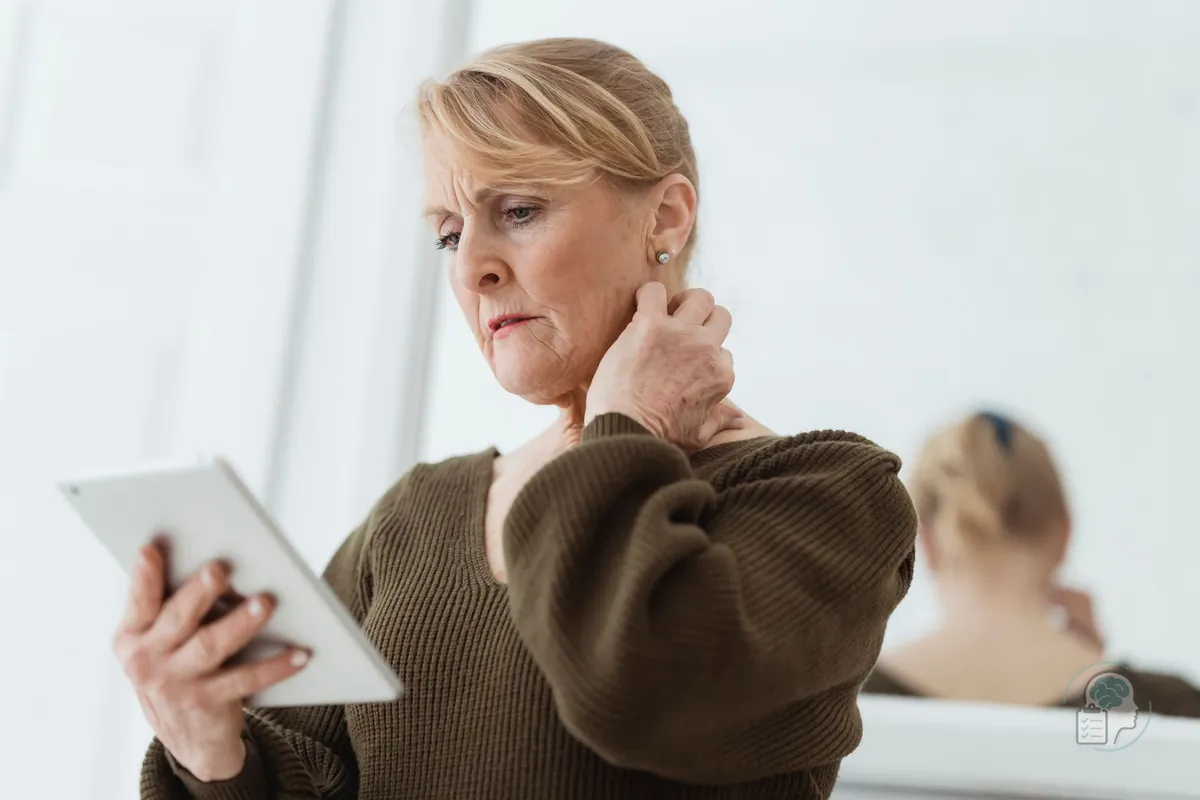
You feel a lump in your neck in the shower. By one in the morning you have read ten pages about lymph nodes and you are expecting the worst. Your doctor examines you and says it is nothing; for two days you breathe a sigh of relief, until a twinge in your chest starts it all again.
If worrying about your health takes up so much room, it may be health anxiety, once called hypochondria. It is not imagination or exaggeration, and there is a treatment that works. If you are thinking about seeing a psychologist and looking for therapy for health anxiety, this guide explains when to seek help, which therapy works, what it involves, how long it takes, whether it works online and how to choose a professional.
When to see a psychologist for health anxiety
The NHS describes health anxiety as spending so much time worrying you are ill, or going to get ill, that it starts to take over your life, and says it is related to obsessive compulsive disorder. You may have it if you:
- Constantly worry about your health.
- Frequently check your body for signs of illness, such as lumps, tingling or pain.
- Are always asking people for reassurance that you are not ill.
- Worry that a doctor or medical tests may have missed something.
- Obsessively look at health information on the internet or in the media.
- Avoid anything to do with serious illness, such as medical TV programmes.
- Act as if you were ill, for example by avoiding physical activities.
The NHS adds an important point: anxiety itself causes symptoms, such as headaches or a racing heartbeat, which are easy to mistake for signs of illness. That is why physical symptoms should first be checked by a doctor. And the NHS advises getting help if your worries are preventing you from leading a normal life or if self-help is not working. How the loop of checking, seeking reassurance and avoiding works is explained in Health anxiety: what hypochondria is and how to break the loop.
When normal test results do not reassure you
One of the most recognisable signs is the one the NHS describes: worrying that the doctor or the tests have missed something. Each normal result brings relief for a while, but the doubt returns and asks for another test, another opinion or another search. That is why more tests do not break the cycle: what helps is working on the worry and the checking that feed it, which is exactly what therapy does.
To put numbers on it before you seek help, the Anxiety Test asks about symptoms such as having noticed "palpitations, a racing heart, sweating or shortness of breath without any physical exertion", and the OCD Test covers the need to ask other people again and again whether everything is fine in order to reassure yourself.
Which treatment works for health anxiety
The NHS explains that, after a diagnosis of health anxiety, a GP may refer you for a talking therapy such as cognitive behavioural therapy (CBT) or offer a medicine for anxiety. The therapy has strong support. A meta-analysis by Cooper and colleagues, covering 14 trials, found a large effect of CBT compared with other options, such as usual care, waiting lists, medication or other therapies, and the effect held at six and twelve months.
It also works for people who keep going back to specialists. In a trial published in The Lancet by Tyrer and colleagues, with 444 patients from hospital cardiology, endocrinology, gastroenterology, neurology and respiratory clinics, five to ten sessions of adapted CBT led to twice as many people reaching normal levels of health anxiety as usual care, and the difference was still there at two years. Generalised anxiety and, to a lesser extent, depression also improved.
What therapy for health anxiety involves
Therapy is not about someone telling you over and over that you are fine. It works on what keeps the fear going:
- Recording safety behaviours: how often you check your body, search online or ask someone. The NHS suggests this as a first step.
- Questioning catastrophic thoughts. A two-column table, with the worry on one side and a more balanced thought on the other, as the NHS suggests: "I'm worried about these headaches" next to "Headaches can often be a sign of stress".
- Interpreting body sensations realistically, understanding that anxiety itself produces palpitations, dizziness or tension.
- Gradually cutting down on checking and on asking for reassurance, which calm you for a while but feed the doubt.
- Getting back to what you have avoided: sport, plans, conversations or programmes you gave up out of fear.
We explain cognitive behavioural therapy in general in Cognitive behavioural therapy: what it is, how it works and what it treats.

What about medication?
The NHS mentions a medicine for anxiety as an alternative to therapy or alongside it. That decision is always made by a doctor, who also looks at your physical health.
How long therapy for health anxiety takes
It tends to be a relatively short therapy. In Tyrer's trial, five to ten sessions were enough, and in Axelsson's, which we discuss below, treatment lasted twelve weeks. According to Cooper's meta-analysis, the effects held at one year. If health anxiety comes with depression, other phobias or OCD, it may take longer.
Does online therapy work for health anxiety?
Yes, and there is a good trial behind it. In a trial by Axelsson and colleagues published in JAMA Psychiatry, with 204 patients at a primary care clinic, twelve weeks of internet-delivered CBT was not inferior to face-to-face CBT. Therapists also spent around ten minutes per patient per week on the online version, compared with around 46 face to face, and the cost was lower.
There is one more reason to consider it: online therapy can help you work on the problem in the very place where the checking and searching usually happen, your home. If you have never had therapy by video call, Online psychologist: how to choose well and what to expect from video-call therapy may help.
How to choose a psychologist for health anxiety
These checks help you get it right:
- Registration as a health professional. This comes first.
- Experience in cognitive behavioural therapy for health anxiety.
- Someone who does not simply reassure you. If every session ends with "I'm sure it's nothing", the cycle stays the same.
- Someone who takes your symptoms seriously. They are not imaginary: anxiety produces real sensations.
- Coordination with your doctor, so that check-ups make sense and do not become one more form of checking.
- Flexibility: online sessions if that suits you better.
A psychologist for health anxiety
At MyPsicoTest we recommend Xènia Capel Salcedo, a licensed clinical psychologist (COPC 14982) with a master's degree in Clinical Psychology and Psychotherapy. She sees clients in Igualada and Sant Sadurní d'Anoia and also through online therapy, and on her blog she has written an article about hypochondria and health anxiety. In it she explains that in her practice she combines cognitive behavioural therapy, EMDR and mindfulness, tailored to each case: she works on identifying and restructuring catastrophic thoughts, interpreting body sensations realistically, preventing checking and reassurance seeking, and gradual exposure to uncertainty. She works from an integrative, evidence-based approach: on her website she explains that she uses tools from cognitive behavioural therapy, EMDR, systemic therapy and person-centred therapy. Sessions are available in English, Spanish or Catalan, and the first contact is a free, no-commitment information consultation. She herself points out that in a serious crisis or psychiatric emergency, immediate in-person care is what is needed.
If your result worries you or you want a professional assessment, you can talk to Xènia Capel Salcedo, a licensed psychologist (COPC reg. 14982), who offers a free first consultation call and online therapy from anywhere.
MyPsicoTest team · Updated:
FAQ
Frequently asked questions
What is health anxiety?
It is spending so much time worrying you are ill, or going to get ill, that it takes over your life. It used to be called hypochondria, and the NHS links it with OCD.
Are hypochondria and health anxiety the same thing?
Yes, they are two names for the same problem. The NHS uses health anxiety, and studies such as Cooper's meta-analysis refer to health anxiety or hypochondriasis interchangeably.
Which therapy works for health anxiety?
Cognitive behavioural therapy. A meta-analysis of 14 trials found a large effect compared with other options, which held at one year, and in a trial of 444 hospital patients five to ten sessions were enough.
How many sessions does it take?
It depends on the person, but it tends to be a short therapy. In the studies, five to ten sessions or around twelve weeks of treatment gave good results.
Does online therapy work for health anxiety?
Yes. In a trial with 204 patients, internet-delivered CBT was not inferior to face-to-face therapy and needed much less therapist time.
Can anxiety cause physical symptoms?
Yes. The NHS points out that anxiety itself causes symptoms such as headaches or a racing heartbeat, which are easy to mistake for signs of illness.
What can I do in the meantime?
The NHS suggests keeping a diary of how often you check and cutting down gradually, writing more balanced thoughts, distracting yourself when you feel the urge to check and getting back to activities you have avoided.
Related articles

Therapy for driving anxiety: how fear of driving is treated and when to get help
You take the long way round to avoid the motorway or let someone else drive. When to get help for fear of driving and what the therapy that works involves.

Therapy for panic attacks: what treatment involves, how long it takes and how to choose
Your heart starts racing on the underground and you are sure you are going to die. When to see a psychologist for panic attacks, what effective therapy is like and how long it takes.

Therapy for expats: why your own language matters and how to choose
You live abroad, everything looks fine on paper and yet something weighs on you. When to seek therapy as an expat, why your own language matters and how therapy works at a distance.