Sensory overload: what it is, how it feels and when it may be autism
The hum of the strip light, the music, three conversations at once: suddenly you cannot take any more and need to get out. What sensory overload is and when it may be autism.
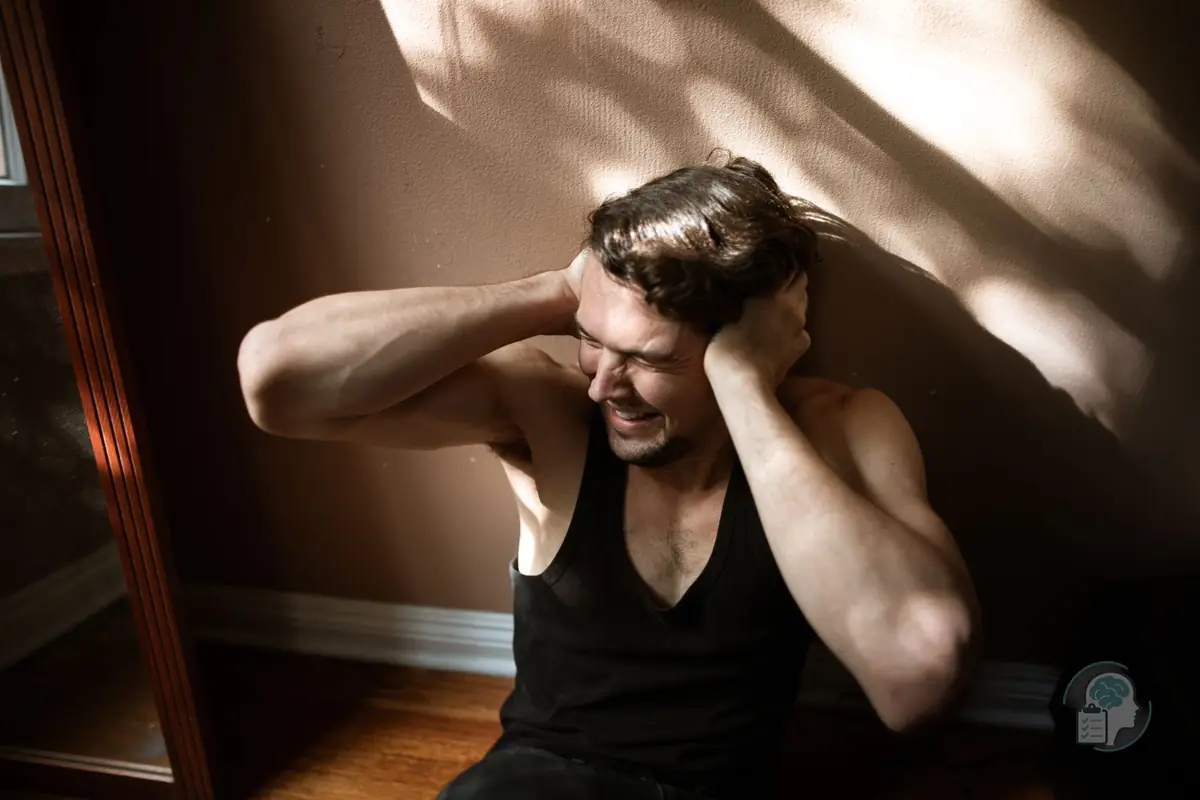
Saturday afternoon at the supermarket. The strip light hums, music is playing, a trolley squeaks and an offer is announced over the tannoy. At first it just bothers you. Ten minutes later you cannot follow what the cashier is saying, your jumper itches all over and all you want is to get out. When you get home you need an hour in the dark and in silence. Everyone else did the same shopping without noticing a thing.
That has a name: sensory overload. It is not a diagnosis or a quirk, but when it is frequent, intense or has been with you all your life, it is worth understanding where it comes from. This guide explains what it is, how it shows, why it happens, what may lie behind it (from autism to ADHD, misophonia or migraine), what to do and which test can help you get your bearings.
What sensory overload is
The National Autistic Society (NAS), a UK charity for autistic people, describes it as what happens when a person becomes overwhelmed by sensory input: they have taken in more sensory information than they can process and cannot take any more. The organisation points out that it is not a clinical term but the way autistic people describe how high sensitivity, combined with certain triggers, leads to overwhelm. Sometimes a single sense, such as a smell or a light, is enough.
What matters is where it happens: in the brain, not in the ears or eyes. You can have perfect eyesight and still find bright light unbearable, because what differs is how the information from your senses is processed. And there are more than five senses. As well as sight, hearing, smell, taste and touch, there is balance and movement, the sense of where your body is in space and interoception, which is noticing whether you are hungry, thirsty, cold or need the toilet.
There are two ways of processing differently. Hypersensitivity means feeling much more than other people, and hyposensitivity means feeling much less and seeking out more intense input. Many people have both, depending on the sense or the moment. Sensory overload is a consequence of the first.
Signs of sensory overload: how it shows
Triggers vary from person to person, but the NAS lists some very common ones:
- Sight: fluorescent or very bright lights, direct sunlight, crowded or cluttered places, patterned carpets and wallpaper, eye contact.
- Hearing: loud voices, music, the hum of electrical equipment, unexpected noises such as alarms or sirens, background noise in an office.
- Touch: crowds, being touched unexpectedly, wind or rain on your skin, the textures of clothes or of some foods.
- Smell and taste: perfumes and deodorants, body odours, cooking smells, certain flavours.
- Internal sensations: being too hot or too cold.
A shopping centre has almost all of them: it is hot and crowded, the lighting is fluorescent, every shop has its own music and displays, the food court mixes smells and finding the exit is hard work.
When overload hits, autistic people describe signs such as stopping talking, seeming absent or closed off, being unable to concentrate, making repetitive movements to calm down, pacing or rocking, finding input even stronger, and intense reactions such as crying, shouting, running away, hiding or not being able to bear being touched.
Exploding or shutting down: overload crises
If the overload continues, it can end in a meltdown: an intense response to an overwhelming situation in which the person temporarily loses control of their behaviour, with shouting, crying or lashing out. The NAS stresses that it is not a tantrum or bad behaviour. At other times the person withdraws: they stop interacting or avoid the situation altogether. There are usually warning signs beforehand, such as pacing, asking the same question again and again, rocking or becoming very still, and at that point the crisis can still be prevented.
The other extreme: noticing too little
Overload is the most visible part, but hyposensitivity counts too: not noticing when someone calls your name, not feeling cold, hunger or pain until they are very intense, or seeking out very loud music and strong input in order to feel enough. In a meta-analysis by Ben-Sasson and colleagues, covering 14 studies, the biggest difference between autistic people and others lay precisely in this under-responsiveness, ahead of hypersensitivity. The differences were largest in studies of children aged 6 to 9.
Why sensory overload happens
In autism, the NAS explains that differences in the activity and connections of the brain and nervous system can lead to sensory information being processed differently, although it warns that many of these studies had few participants.
What is clear is that the threshold is not fixed. Many autistic people say they can tolerate a trigger for a while, but much less when they are tired, at the end of the day or week, if they have not eaten properly, if they have been masking for a long time, if they are unwell or if they are stressed or anxious. That is why the same noise that is manageable on a Tuesday morning can be unbearable on a Friday afternoon.
And it is not an overreaction. The NAS notes that these differences are often misread as being picky or fussy, when something other people barely notice can cause discomfort and even pain.
Anxiety and stress also play a part outside autism. A study by Amos and colleagues with adults from the general population compared several models, and the one that fitted best placed sensory over-responsivity and stress as the bridge between autistic traits and anxiety. The authors suggested environments with less sensory input to help prevent it.
What may lie behind sensory overload
Autism
It is the best-known explanation. The NHS lists among the signs of autism in adults being very sensitive, or not sensitive at all, to light, sounds, smells, tastes or textures. In the diagnostic criteria, sensory differences are one of four examples of restricted and repetitive behaviours and interests, two of which are needed: they count, but they are not essential for a diagnosis.
Nobody knows exactly how many autistic people are affected: according to the NAS, research puts it at between 53% and 95%. In a study by Crane, Goddard and Pring with autistic adults, 94.4% scored at extreme levels in at least one area of a sensory questionnaire, with profiles that varied widely. And a study by Tavassoli and colleagues with 221 autistic and 181 non-autistic adults found more hypersensitivity in sight, hearing, touch, smell, taste and proprioception, and that the more autistic traits a person had, the more hypersensitivity they described, including among those who were not autistic.
Masking complicates things. Many autistic people put up with what overwhelms them through sheer effort, so as not to stand out, and the NHS points out that this effort makes everyday life exhausting. We go through the other signs of autism in adults in Asperger's in adults: signs, what it means today and which test to take.
ADHD
Sensory sensitivity is not exclusive to autism. In a study by Bijlenga and colleagues with 116 adults with ADHD, there was more hypersensitivity and more hyposensitivity than in the reference population, especially in hearing and activity level. It was linked to the severity of ADHD rather than to autistic traits, and it appeared in 43% of women compared with 22% of men. Another study, by Panagiotidi and colleagues, with 234 people from the general population, found that the more ADHD traits people had, the more sensory difficulties they reported across all the senses.
In ADHD, the sensory side mixes with distraction: background noise pulls you away from what you are doing. Autism and ADHD also often occur together, so one does not rule out the other.
High sensitivity
The highly sensitive person label describes someone who processes stimuli more intensely, but it is not a diagnosis: it is a temperament trait proposed by the psychologist Elaine Aron. A study by Panagiotidi and colleagues with 274 adults found that scores on the high sensitivity scale rose with ADHD traits, and sometimes the label hides autism that nobody has identified. We explain it in Highly sensitive person: what the evidence says and what may lie underneath.
Anxiety, stress and trauma
When you are on alert, everything weighs more. In post-traumatic stress disorder, the NHS describes feeling very anxious and looking for danger all the time, known as hypervigilance. If the hypersensitivity began during a period of intense anxiety or after a trauma, and was not there before, that is a stronger clue than autism, which is present from childhood.
Misophonia and hyperacusis
These are two kinds of sound sensitivity that are often mistaken for overload:
- Hyperacusis. According to the NHS, it is when everyday sounds seem much louder than they should, sometimes to the point of pain: jingling coins, a barking dog, a car engine, someone chewing, a vacuum cleaner. It can appear on its own, after a sudden loud noise or alongside other conditions such as tinnitus, migraine or autism. It is something to raise with your GP, who may refer you to a hearing specialist.
- Misophonia. A consensus of experts led by Swedo defines it as decreased tolerance to specific sounds, especially those other people make with their bodies (chewing, slurping, throat clearing, breathing) or repetitive ones, such as a clicking pen or a keyboard. It is not the volume that bothers you but the sound itself, and the most common reactions are anger, irritation, disgust or anxiety. It is usually first noticed in childhood or early adolescence and can occur alongside anxiety, OCD, ADHD or autism.
Migraine
If sensitivity to light and noise comes in episodes, together with a throbbing headache, often on one side, and nausea, it may be migraine: the NHS lists it among the main symptoms. That needs to be assessed by a doctor.
How to tell the causes apart
This table sums up the most useful clues:
| What your sensitivity is like | What may be behind it | What can guide you |
|---|---|---|
| Since childhood, across several senses, with a need for routine and relationships that take effort | Autism | Autism Test |
| Noises and stimuli distract you, you struggle to concentrate and you have always been restless or impulsive | ADHD | ADHD Test |
| Certain sounds other people make (chewing, breathing, typing) make you angry or disgusted | Misophonia | Talking to a professional |
| Everyday sounds seem too loud or hurt | Hyperacusis | Your GP |
| In episodes, with a throbbing headache and nausea | Migraine | Your GP |
| Recently, with constant nerves, during a stressful period or after a trauma | Anxiety, stress or PTSD | Anxiety Test or Stress Test |
These explanations do not rule each other out. Autism and ADHD often appear together, and misophonia can accompany either.
Is there a sensory overload test?
There is no sensory overload test, because it is not a diagnosis. The MyPsicoTest questionnaire that captures it most directly is the Autism (ASD) Test, which devotes six of its twenty statements to the senses:
- "Certain everyday sounds (someone chewing, the hum of a light, several conversations at once) feel unbearable to me even though they do not bother other people."
- "Clothing labels, seams or certain textures bother me so much that I avoid particular garments or foods."
- "Bright lights, strong smells or crowded places overwhelm me much sooner than the people around me."
- "When I am overloaded with stimuli I need to withdraw, and if I cannot, I shut down or end up exploding."
- "I am less aware of some sensations: I may not notice cold, hunger or pain until they are very intense."
- "There are movements or sensations that calm me and that I repeat often: rocking, moving my hands, touching a specific texture or humming the same sound."
The other fourteen are split between social communication and interaction, including masking (eight), and routines, interests and flexibility (six). You answer them in about six minutes, from "strongly disagree" to "strongly agree", thinking about how you have been throughout your life rather than in recent weeks. The test page itself asks you to answer as your "unmasked" self: if you put up with a noise through conscious effort, that still counts as a difficulty.
The result ranges from 0 to 60, with four guidance levels (low, mild, moderate and high) and a breakdown by area. That breakdown matters: as the test page explains, someone may score low on the social area thanks to years of practice and very high on sensory sensitivity and routines, and both profiles exist within the spectrum. A screening test does not diagnose; a diagnosis is made by a professional through a clinical interview and a review of your history since childhood. The result is calculated in your browser and your answers are not stored.
Other tests that may help
If what you notice most is that noise pulls you away from what you are doing, the ADHD Test includes this statement: "I am easily distracted by noise, external stimuli or my own thoughts". If you recognise yourself in the emotional intensity, the Giftedness Test includes this one: "I am very sensitive to sensory stimuli: noises, lights, textures, smells or the atmosphere of a place". And if the sensitivity arrived along with your nerves, try the Anxiety Test. All the questionnaires, free and anonymous, are in the psychological tests catalogue.
What to do about sensory overload
In the moment
- Remove what you can. Turn off lights, music or the TV, or move away from the smell. If that is not possible, find a quieter place: another room or outside.
- Keep talking to a minimum. With an overloaded brain, every sentence is extra information to process.
- Let your body regulate itself. Rocking or moving your hands is a way of calming down, and the NAS advises not stopping it unless the person is hurting themselves.
- Give yourself time. Recovering from overload takes longer than it seems.
Day to day
- Keep a sensory diary. The NAS suggests noting what overwhelms you, the times of day when you have more or less energy, what helps during overload and what helps you recover. Over time, patterns may emerge.
- Adapt your surroundings. NICE's guideline on autism in adults recommends reducing fluorescent lighting, using blackout curtains or dark glasses, making the most of natural light, avoiding patterns in favour of calm colours, cutting down noise and respecting personal space.
- Use tools, in moderation. Noise-cancelling headphones or ear defenders, sunglasses or tinted glasses and fidget objects help many people. That said, the NAS and the NHS warn that wearing ear protection all the time can make you more sensitive to noise: it is better kept for very noisy places.
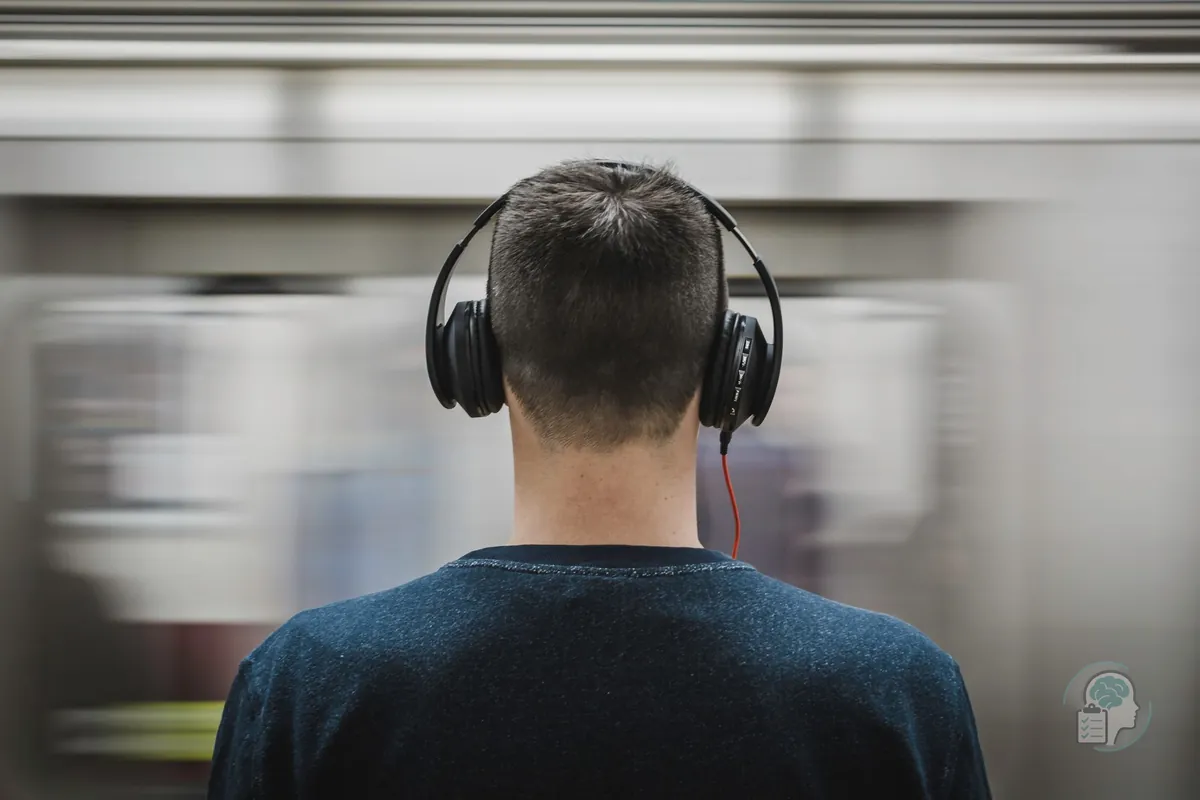
- Plan ahead. Knowing what to expect before going somewhere full of stimuli helps, as do small things such as waiting for people to get off before approaching the platform.
- Do not judge yourself or let others judge you. Avoiding something that hurts is not the same as avoiding something you dislike.
- If it limits you, ask for professional help. An occupational therapist can assess your sensory profile, although the NAS acknowledges that results for sensory therapies are still mixed. And if you suspect autism or ADHD is behind it, a diagnostic assessment puts a name to what is happening. We explain what therapy is like for autistic adults in Therapy for autistic adults: how a psychologist can help and how to choose one.
At the end of the test you will find our recommendation of a licensed psychologist who works with autism, ADHD and anxiety, also online.
If your result worries you or you want a professional assessment, you can talk to Xènia Capel Salcedo, a licensed psychologist (COPC reg. 14982), who offers a free first consultation call and online therapy from anywhere.
MyPsicoTest team · Updated:
FAQ
Frequently asked questions
What is sensory overload?
It is what happens when you take in more stimuli than your brain can process: lights, noises, smells, textures or internal sensations. It is not a clinical term or a diagnosis, but it is very common in autism and also appears in ADHD.
Is sensory overload always autism?
No. It is very common in autism, but it also appears in ADHD, with anxiety or stress, and it is often confused with misophonia, hyperacusis or migraine. The most useful clues are how long it has been happening and what comes with it.
What is the difference between sensory overload and misophonia?
Overload comes when too much input builds up, from one sense or several. Misophonia is a reaction of anger, disgust or anxiety to specific sounds, especially those other people make when chewing or breathing, even when they are not loud.
How do you calm sensory overload?
By reducing input: turning off lights or music, moving away from noise or going somewhere quieter, keeping talk to a minimum and giving yourself time. Repetitive movements that soothe, such as rocking, help with self-regulation.
What is a meltdown?
It is an intense response to an overwhelming situation in which the person temporarily loses control of their behaviour, with shouting, crying or lashing out. It is not a tantrum: it is the result of being completely overloaded.
Is there a sensory overload test?
There is no specific one, because it is not a diagnosis. The MyPsicoTest autism test includes six statements on sensory sensitivity and gives a result broken down by area. The ADHD and anxiety tests help you weigh up other explanations.
Do noise-cancelling headphones help?
Yes, in very noisy places they are one of the tools autistic people find useful. But wearing them all the time can make you more sensitive to noise, so it is best to keep them for when you need them.
Related articles

Therapy for autistic adults: how a psychologist can help and how to choose one
Therapy is not there to "remove" autism but to help you feel better being who you are. How a psychologist can help an autistic adult and how to choose someone who understands it.

Asperger's in adults: signs, what it means today and which test to take
Many adults come across the word Asperger's after a lifetime of feeling out of place. What happened to that diagnosis, how it shows up in adulthood and which test can guide you.
Compassion fatigue: what it is, the symptoms and how to tell if it is happening to you
You care for other people every day and notice you no longer feel the same, or that you feel everything too much. What compassion fatigue is and which test can help you measure it.