Highly sensitive person: what the evidence says and what may lie underneath
Noisy places drain you, you notice what others miss, and you need hours to recover from an ordinary day. What high sensitivity really is and what may lie behind it.
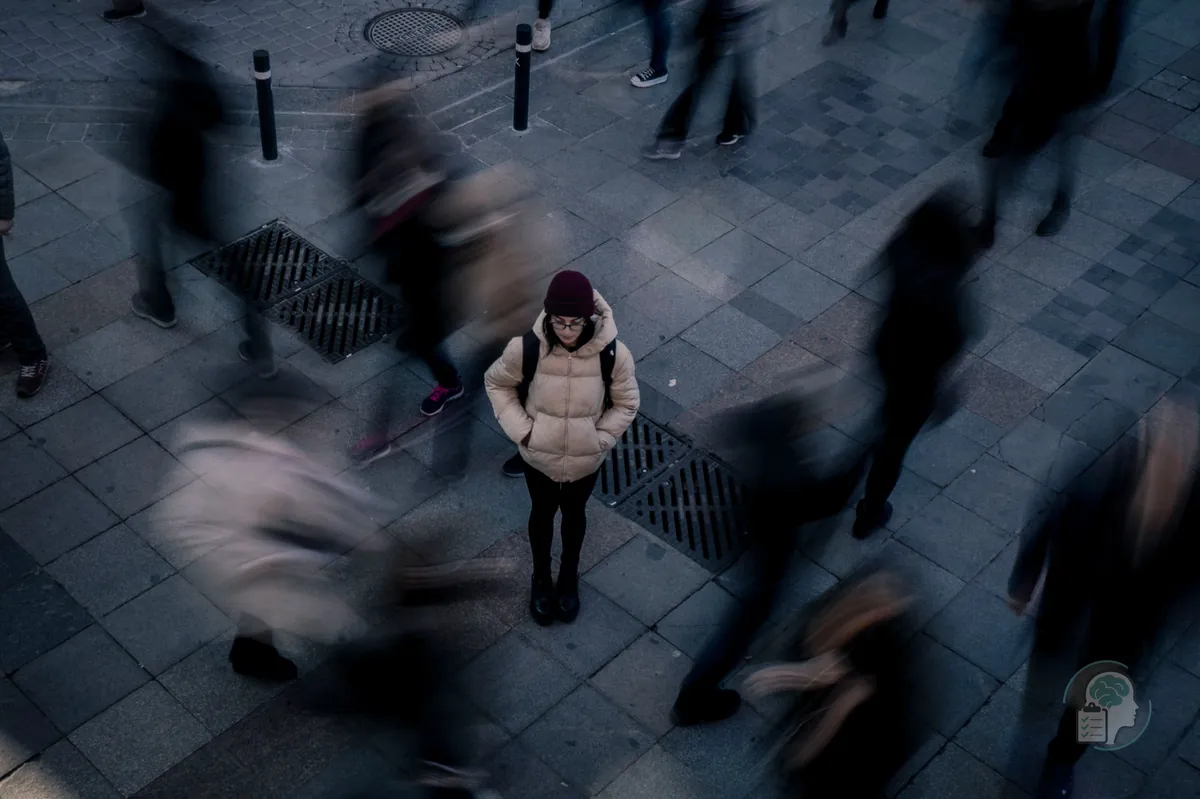
You leave a three-hour family lunch and need half the afternoon alone before you feel human again. You notice your manager is in a bad mood before they open their mouth. The supermarket strip lighting tires you in a way your friends find excessive. At some point someone told you that you are too sensitive, and recently you found a label online that seemed to explain everything: highly sensitive person.
The term has spread enormously in recent years, and with it a mixture of legitimate relief and fairly confused information. It is worth clarifying where it comes from, what research supports, what it does not, and — above all — what else might be explaining what happens to you.
Where the concept comes from
It was formulated by the American psychologist Elaine Aron in the mid-1990s, first in a popular book and later in academic work with Arthur Aron. She gave it a technical name: sensory processing sensitivity. The underlying idea is that some people's nervous systems process incoming information with more depth and detail, which brings an advantage — they pick up nuances others miss — and a cost — they saturate sooner.
Aron estimated that the trait affects between 15% and 20% of the population and summarised it in four characteristics, forming the acronym DOES:
- Depth of processing: things get turned over at length before a decision.
- Overstimulation: intense environments saturate sooner than average.
- Emotional reactivity and empathy: your own and other people's emotions land harder.
- Sensitivity to subtleties: small details, shifts in tone, smells and nuances get picked up.
The Spanish acronym PAS, widely used in that language, simply stands for persona altamente sensible.
What it is and what it is not
This is where most of the confusion sits, so it pays to be precise.
It is not a diagnosis. It appears neither in DSM-5-TR nor in ICD-11, the two manuals that define mental disorders. It is described as a personality or temperament trait, like extraversion, not as a clinical condition. Nobody can diagnose you with "high sensitivity", because there is nothing to diagnose.
It is not shyness or introversion. That is the most repeated error. Around a third of people with the trait are thought to be extraverted: they enjoy people and also need to withdraw sooner. Nor is it social anxiety, which is a different thing and does appear in the manuals.
It is not an illness. Being more responsive to stimuli is not a problem in itself, any more than being tall or having good hearing is.
And it is not a superpower either. A good deal of the content circulating has turned the label into a flattering identity — more empathy, more depth, more creativity — with little support behind it and a fair amount of risk, because a comfortable identity is an easy place to settle.
What the research says
What holds up reasonably well
The strongest line of work does not talk about a special group but about environmental sensitivity: individual differences in how much our surroundings affect us. Jay Belsky and Michael Pluess developed the idea of differential susceptibility, and the finding is more interesting than it is usually reported.
More sensitive people are not only harmed more by adverse environments. They also benefit more from favourable ones. It is not simply a vulnerability: it is a greater capacity to respond in both directions. The metaphor used in the literature is orchids and dandelions: the orchid wilts in poor conditions and flourishes spectacularly in good ones; the dandelion grows anywhere, with neither great peaks nor troughs.
That has a very concrete practical consequence: if you are one of the sensitive ones, choosing your environment well pays off more for you than for other people.
What remains disputed
Two things, and they are worth saying.
The first is whether this is a category or a continuum. Talking about "HSPs" as a distinct group — you either are or you are not — fits the data poorly; the evidence points more towards a dimension on which everyone sits somewhere.
The second is measurement. The scale commonly used correlates considerably with neuroticism and negative affect, which raises an uncomfortable question: how much of what it measures is sensitivity and how much is a tendency towards anxiety. Much of the current academic debate runs along those lines.
The signs people recognise
They carry no diagnostic weight, because there is no diagnosis to make, but they come up again and again:
- Noisy places, crowds and brightly lit spaces are more tiring than seems reasonable.
- After an intense day you need time alone, and it is not a whim: without it, the next day starts worse.
- You register other people's moods before they say anything, and it affects you.
- Violent films or certain news stories stay with you for hours.
- Working with someone looking over your shoulder clearly lowers your performance.
- Rushing and tight deadlines disorganise you more than average.
- Caffeine, pain, hunger or lack of sleep register more intensely.

What the label may be covering up
This is the important part, and the one almost nobody covers. High sensitivity is a description, not an explanation. And several conditions produce exactly the same symptoms, with the difference that those do have assessment and treatment.
Social anxiety
If what drains you is not the noise but being watched and judged, that changes things. The UK's National Health Service puts it well: social anxiety is more than shyness, it is a fear that does not go away and that affects everyday activities, confidence, relationships and work. If you avoid situations, prepare them days in advance and replay them afterwards, the Social Anxiety Test is the one to take.
Autism
Sensory hypersensitivity is a core feature of the autism spectrum, and many adult women arrive at the HSP label well before a diagnosis, because it sounds better and demands nothing. The US National Institute of Mental Health lists unusual responses to sensory input among its features. If there is also difficulty with unspoken social rules, a need for routines and very intense interests, the Autism (ASD) Test is designed for that profile.
ADHD
Less obvious, but common. Difficulty filtering out irrelevant stimuli, intense emotional reactivity and exhaustion in chaotic environments fit ADHD as well as they fit high sensitivity. The NHS describes how it presents in adults. If they come alongside forgetfulness, disorganisation and trouble starting tasks, the ADHD Test measures inattention and impulsivity separately.
Giftedness
Emotional intensity, depth of processing and the sense of running at a different pace show up here too. The Giftedness Test gathers indicators of ability, creativity and intensity.
They are all in the psychological tests catalogue: free, anonymous, and the result is calculated on your own device. And if several come out high at once, that does not mean having several things: it means there is overlap. Neurodivergence in adults: what it means, signs and where to start explains why so many adults come to these assessments late, and our guide on the Mental health test: what it measures, which ones exist and how to read your result covers how to read the scores without overreaching.
What helps if this sounds like you
Label or no label, what works is fairly concrete.
- Ration the stimulation rather than enduring it. Stepping out of the family lunch for ten minutes is not rude, it is maintenance.
- Protect the transitions. The gap between work and home, or between one plan and the next, is where recovery happens. Filling it with your phone prevents exactly that.
- Guard your sleep above everything. Lack of rest amplifies any sensory or emotional sensitivity.
- Anticipate rather than avoid. If you know a place will saturate you, arrive early, sit near the exit, decide in advance when you are leaving. Avoiding altogether ends up shrinking your life.
- Choose your environment deliberately. This is the useful part of differential susceptibility: a job with a reasonable manager or a quiet flat gives you more than it gives the average person. It is worth fighting for.
- Do not turn it into the explanation for everything. "I am an HSP" should not be the answer to why you have slept badly for eight months or why you avoid speaking up in meetings. Those things have other explanations and, unlike the trait, treatment.
If what dominates is sustained exhaustion and you have been like this for months, the problem may not be sensitivity but load; we break it down in Stress, anxiety or burnout: how to tell what is happening to you.
When to seek help
A trait is not treated. What is treated is whatever is limiting you. It is worth consulting when you have stopped doing things that mattered to you, when exhaustion does not ease with rest, when sustained anxiety, low mood or insomnia appear, or when your environment — work or relationships — has become unsustainable and you cannot see a way out.
In the consulting room nobody is going to remove your sensitivity, nor would they try. The work is on regulation, boundaries, avoidance where there is any, and whatever else surfaces underneath. What that first appointment looks like is covered in When to see a psychologist: signs, common doubts and what happens in the first session.
If your result worries you or you want a professional assessment, you can talk to Xènia Capel Salcedo, a licensed psychologist (COPC reg. 14982), who offers a free first consultation call and online therapy from anywhere.
MyPsicoTest team · Updated:
FAQ
Frequently asked questions
Is being a highly sensitive person a disorder?
No. It does not appear in DSM-5-TR or ICD-11, and it is described as a temperament trait rather than a clinical condition. That means it is neither diagnosed nor treated as such. What can be treated is the associated distress: anxiety, exhaustion or avoidance.
How do I know whether I am highly sensitive or have social anxiety?
The useful criterion is what drains you. With high sensitivity it is the stimulus that saturates: noise, light, crowds, emotional intensity. With social anxiety what weighs on you is fear of being judged, with anticipation beforehand and replaying afterwards. If you avoid situations for fear of embarrassing yourself, that points to the second.
Are high sensitivity and autism the same thing?
No, although they share sensory hypersensitivity. Autism also involves differences in social communication, patterns of routines and highly focused interests, and it is a diagnosis with established criteria. Many adults pass through the HSP label before considering an autism assessment.
Can you stop being so sensitive?
The trait does not go away, and that is not the goal. What does change with work is the management: how much stimulation you take on, how you recover, what boundaries you set and how you interpret what you feel. With that, the same sensitivity stops being a problem day to day.
Is there an official high sensitivity test?
There is a scale created by Elaine Aron used in research and popular writing, but it is not a diagnostic instrument and is not validated for clinical use as such. It also correlates considerably with neuroticism, which complicates interpreting it. A clinical screening questionnaire gives you more practical information.
Which test should I take if this describes me?
It depends what dominates. If it is fear of evaluation, the social anxiety one; if it is the sensory side and unspoken social rules, autism; if there is forgetfulness and disorganisation underneath, ADHD; if it is intensity and depth of processing, giftedness. Taking several and comparing gives a far more useful picture than settling for a single label.
Related articles

Therapy for borderline personality disorder (BPD): what works and how to choose
Emotions that flare up, fear of abandonment and relationships that swing from all to nothing. When to seek help for BPD and which therapies have been shown to work.

Therapy for teenagers: how it works, what parents are told and how to choose
Your teenager barely talks, answers in single words and you cannot tell whether it is their age or something more. How therapy with a teenager works, what parents are told and how to choose.

Integrative therapy: what it is, how it works and when it is the right choice
CBT, EMDR, systemic, humanistic... and on many profiles, "integrative approach". What integrative therapy is, why so many psychologists use it, what the research says and how to tell if it is right for you.