Jealousy in relationships: when it is normal and when it becomes a problem
You check when they were last online, ask who they were with and still cannot settle. When jealousy in relationships is normal, when it becomes a problem and which test can guide you.
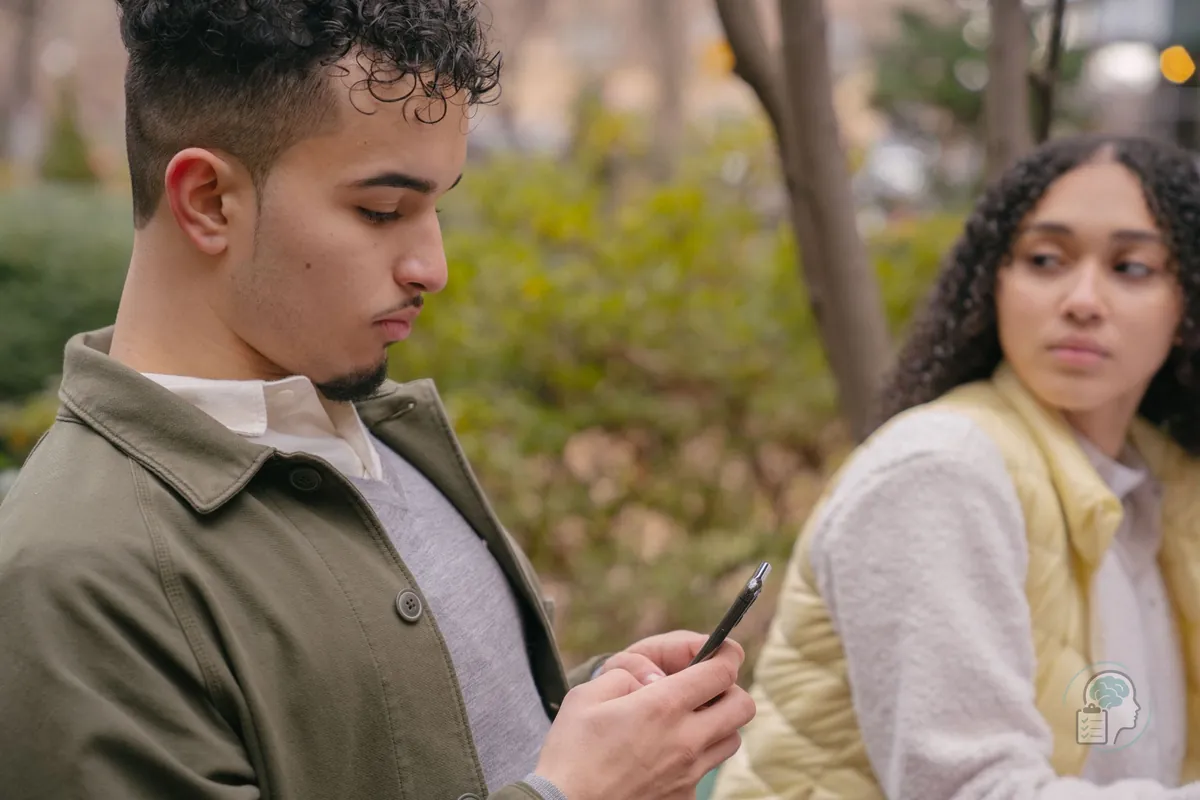
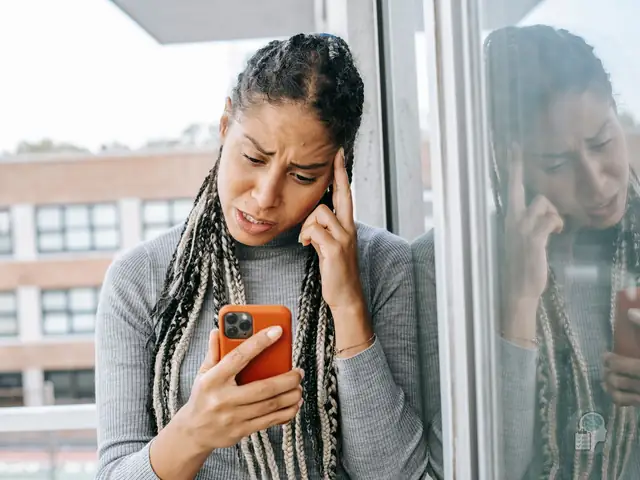
It is half past eleven at night and your partner is still texting someone. They smile at the screen. You ask who they are talking to, they say a colleague from work, and you believe them, more or less. Half an hour later you are thinking about that smile again. The next morning, while they are in the shower, their phone is left lying on the table.
Jealousy in relationships is one of the most common emotions and one of the most misunderstood. Some people take it as proof of love; others are ashamed of feeling it. This guide explains what research says about jealousy, how normal jealousy differs from the unhealthy kind, why it appears, when it turns into control and which test can help you see your own situation more clearly.
What is jealousy in a relationship?
British psychiatrists Kingham and Gordon begin their review of morbid jealousy with something that is often forgotten: jealousy is a common, complex, normal emotion. They start from the Oxford English Dictionary definition, which speaks of resentment towards a person one thinks of as a rival, and point out that what matters is the belief that there is a rival. Whether there really is one matters less.
In 1989, Pfeiffer and Wong presented the Multidimensional Jealousy Scale, which is still used in research. It distinguishes three components:
| Component | What it is | Example |
|---|---|---|
| Cognitive | Suspicions about your partner's faithfulness | Thinking they are secretly seeing someone |
| Emotional | What you feel in a specific situation | Being upset when you see them flirting with someone |
| Behavioural | What you do to check or keep watch | Asking where they have been or going through their things |
Separating them helps make sense of something that gets mixed up in everyday life. In their studies, emotional jealousy went hand in hand with greater love for the partner, whereas cognitive jealousy, the suspicion, was associated with less love. Feeling a pang when you see your partner flirting with someone is human. Living convinced that they are cheating on you is something else.
Normal jealousy vs unhealthy jealousy
Feeling jealous is not the problem. What differs is how the jealousy works. According to Kingham and Gordon, healthy people become jealous in response to firm evidence, change their minds when new information comes to light and see a single rival. In unhealthy jealousy, people draw firm conclusions from irrelevant details, hold on to their suspicion even when the facts say otherwise and end up accusing their partner of cheating with many people. The review adds a surprising point: someone can have morbid jealousy even if their partner really is unfaithful, if the evidence they cite is false and their reaction is out of proportion.
| Normal jealousy | Unhealthy jealousy | |
|---|---|---|
| What triggers it | A specific event | Trivial details read as proof |
| When the facts contradict it | It settles | It persists or looks for new proof |
| Who the rival is | One specific person | It could be anyone |
| How much time it takes up | A short while | A lot, and it is hard to put out of your mind |
| What happens with the partner | You talk to them | You watch them, question them and limit their freedom |
A study from the University of Pisa helps draw the line. Marazziti and colleagues compared university students with patients with obsessive-compulsive disorder (OCD) whose main obsession was jealousy. What separated the two ends was how much time jealous concerns took up, how hard they were to put out of mind, how much they damaged the relationship, how far they limited the partner's freedom and how much checking went on. They also found that one in ten students, with no other psychological problem, had jealous thoughts about their partner, although less intense than the patients' thoughts.
Morbid jealousy: when jealousy is a symptom
Morbid jealousy, pathological jealousy or Othello syndrome are names for the extreme end. The two British psychiatrists stress that it is not a diagnosis but a symptom that can appear in very different conditions, and they describe three forms:
- Delusional: an absolute conviction that the partner is unfaithful, which no evidence can shift. When it appears without other symptoms, it is a subtype of delusional disorder.
- Obsessional: thoughts of infidelity intrude against the person's will; they know the thoughts have no basis and are ashamed of them, but they check again and again.
- Overvalued idea: an understandable suspicion pursued far beyond the bounds of reason, at great cost to the person and causing their partner distress.
The same review describes two associations worth knowing about. The link with alcohol is well established: in two studies of men in treatment for alcohol problems, between 27% and 34% had morbid jealousy. And in one of the series of patients it cites, more than half had depression.
Signs that jealousy in a relationship has become a problem
These are some signs of unhealthy jealousy. The first two match, almost word for word, one of the statements in the MyPsicoTest emotional dependency test:
- You check their phone, their social media or when they were last online.
- You ask them over and over where they are and who they are with.
- A delay, a "like" or a new password feels like proof.
- No explanation reassures you for long.
- You ask them to stop seeing certain people or not to go out without you.
- You dwell on it for much of the day and find it hard to think about anything else.
- You keep arguing about the same thing.
The British review describes the trap these couples fall into: the accused partner is guilty until proven innocent, and that proof never comes, because an irrational preoccupation cannot be argued away. That is why, once jealousy has become unhealthy, showing your phone or giving more explanations rarely solves anything.
Why jealousy happens in relationships
Fear of abandonment and anxious attachment
In a study of 100 adults with no psychological problems, Marazziti and colleagues compared attachment style with different dimensions of jealousy. Attachment anxiety, that is, the fear that your partner will not be available or will leave you, was related to all of them. People with a preoccupied attachment style scored higher than secure people on obsessionality, interpersonal sensitivity and fear of loss. The pattern repeats in pathological jealousy: a study from the University of São Paulo found that most people with pathological jealousy had an anxious-ambivalent attachment style and high trait anxiety. We explain this attachment style in depth in Anxious attachment: what it is, signs in relationships and how to tell if you have it.
A sense of self-worth that feels threatened
Jealousy also has a lot to do with how you value yourself. In two experiments, DeSteno, Valdesolo and Bartlett evoked jealousy in the laboratory through carefully orchestrated social encounters and found that a threat to self-esteem was one of the main mechanisms behind it. The second experiment also provided direct evidence that jealousy can cause aggression.
Social media and phones
In 2009, a study from the University of Guelph, in Canada, of 308 university students found that the more they used Facebook, the more Facebook-related jealousy they felt, even after taking their personality and their relationship into account. The authors proposed a loop: the site shows you ambiguous information about your partner that you would not otherwise have access to, that information feeds jealousy, and jealousy leads to even more checking.
When jealousy turns into control
Jealousy is not proof of love, although it is often presented that way. A systematic review from the London School of Hygiene & Tropical Medicine brought together 51 studies from 28 countries and found a consistent association between jealousy, real or suspected infidelity and intimate partner violence against women. The evidence supported explanations based on patriarchal culture, on gender identities that feel threatened and on a lack of skills to regulate emotions and resolve conflict, but not evolutionary theories. In a later study in Ecuador, involving part of the same team, most participants talked about jealousy in terms of love, and men's jealousy was strongly linked to controlling behaviour.
Kingham and Gordon put it bluntly: domestic violence is a common result of jealousy, whether normal or morbid. The NHS lists among the signs of emotional abuse a partner who accuses you of flirting or having affairs, monitors your social media or uses GPS tracking to know where you are, isolates you from family and friends or tells you who you can see; and, among threats, one who reads your messages or emails. All of this, the NHS points out, is about power and control.
If you are on the receiving end of the jealousy and recognise control, humiliation or fear, the problem is no longer jealousy or the way you love: we explain this in Emotional abuse in relationships: signs, effects and how to get out. If you are in danger, call 112 or your local emergency number. In Spain, the 016 helpline is free, confidential and available by phone at any time, and also on WhatsApp at 600 000 016. And if you are the one who has watched, threatened or frightened your partner, get professional help as soon as possible.
Is there a jealousy test?
Research uses questionnaires such as Pfeiffer and Wong's Multidimensional Jealousy Scale or the jealousy questionnaire developed by Marazziti's team. They are tools designed for studies, not for diagnosing yourself at home.
MyPsicoTest does not have a specific jealousy test. What we do have is the Emotional Dependency Test, and one of its 16 statements is exactly this: "I get jealous easily: I have checked their phone or social media, or asked them over and over who they are with." It belongs to the fear of abandonment and loneliness area, which is where jealousy tends to take root. You answer according to how much you agree with each statement, thinking about your current or past relationships, and it takes about five minutes. The statements are grouped into three areas:
- Fear of abandonment and loneliness: besides jealousy, the fear of being left and the distress when your partner takes a while to reply or you do not know where they are.
- Need for approval and attention: whether your mood depends on how your partner treats you.
- Self-subordination and boundaries: whether you put your plans aside or find it hard to say no for fear of losing the relationship.
The score ranges from 0 to 64 and falls into four bands, and the breakdown by area matters as much as the total. You do not need to sign up, and your answers are not sent to any server. A high score does not label you: it tells you that the way you bond resembles the emotional dependency pattern closely enough to deserve an assessment.
Other tests that can help
Because threatened self-esteem lies behind a lot of jealousy, the Self-Esteem Test will help you see how you value yourself outside the relationship. And if thoughts of infidelity intrude even though you know they have no basis, and push you to check again and again, the OCD Test can show whether there is an obsessive pattern. All the questionnaires, free and anonymous, are in the psychological tests catalogue.
How to deal with jealousy in a relationship
Jealousy can be worked on. In a classic study, Dolan and Bishay treated 30 patients with non-psychotic morbid jealousy with cognitive therapy. Those who spent 12 weeks on a waiting list did not improve, a sign that the problem does not go away just by waiting; after therapy, most improved on every measure of jealousy, both at the end of treatment and at follow-up, and their partners confirmed it. According to the British review, cognitive therapy is effective mainly when obsessions are prominent, and couple therapy is also recommended.
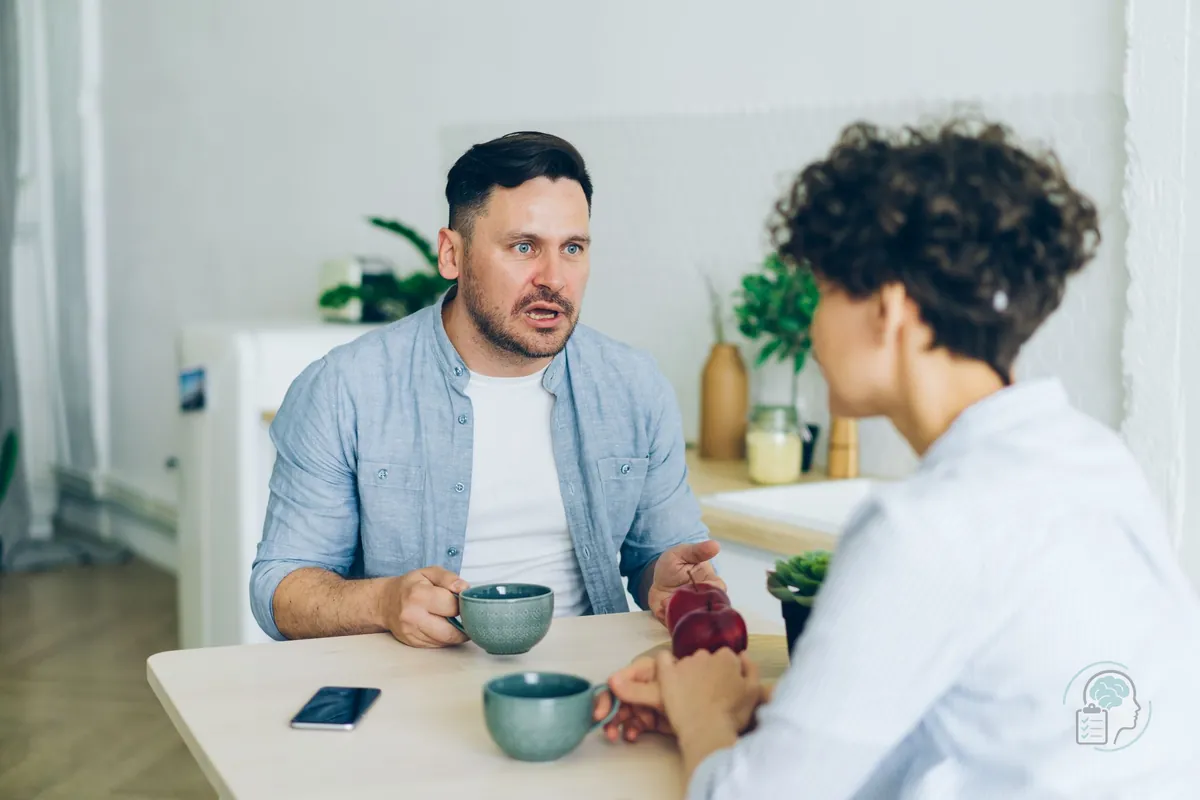
In the meantime, some things help day to day:
- Separate what you feel from what you know. The pang of jealousy is an emotion; the suspicion is an interpretation. Before you act, ask yourself what evidence you actually have.
- Do not check their phone. Looking may reassure you for a moment, but it feeds the loop the Guelph researchers described: ambiguous information, more jealousy, more urge to look.
- Talk about what you need, not what you suspect. "I feel uneasy when I don't know whether you're coming home for dinner" opens a conversation; "Who were you talking to?" opens a trial.
- Watch your drinking. Kingham and Gordon explain that the disinhibition that comes with alcohol can bring out jealousy that was already there, held in check.
- Look after your life outside the relationship. Friends, hobbies and plans of your own spread the emotional load and support your self-esteem.
If jealousy takes up much of your day, has already turned into control or keeps repeating from one relationship to the next, therapy is the route with the most evidence behind it. At the end of the test you will find our recommendation of a licensed psychologist who works with emotional dependency, online too.
If your result worries you or you want a professional assessment, you can talk to Xènia Capel Salcedo, a licensed psychologist (COPC reg. 14982), who offers a free first consultation call and online therapy from anywhere.
MyPsicoTest team · Updated:
FAQ
Frequently asked questions
Is it normal to feel jealous in a relationship?
Yes. Jealousy is a common, normal emotion, and feeling a pang in a specific situation does not mean anything is wrong. It becomes a problem when it is sparked by trivial details, is not settled by explanations and leads to watching or controlling your partner.
When is jealousy unhealthy?
When it takes up much of the day, is hard to put out of your mind, damages the relationship, limits your partner's freedom or leads you to check their messages and movements. Also when no evidence to the contrary is enough to calm it.
What is morbid jealousy?
It is the extreme form of jealousy, also called pathological jealousy or Othello syndrome. It is not a diagnosis in itself but a symptom that can take the form of a delusion, an obsession or an overvalued idea, and it should be assessed by a mental health professional.
Is jealousy a sign of love?
No. Feeling jealous at a particular moment can coexist with love, but constant suspicion is associated with less love, and a review of 51 studies consistently links jealousy with intimate partner violence. Loving someone does not justify watching them.
Why am I so jealous?
It is often driven by fear of abandonment, anxious attachment or self-esteem that feels threatened easily. Alcohol and some mental health problems, such as depression or OCD, are also associated with more intense jealousy.
Does checking my partner's phone help me feel calmer?
It may calm you for a moment, but it rarely lasts. A study of university students found that the more they used Facebook, the more jealous they felt, through a loop of ambiguous information and further checking. In morbid jealousy, no proof of innocence is ever enough.
Is there a test to find out if I am a jealous person?
Research uses scales such as the Multidimensional Jealousy Scale. MyPsicoTest does not have a specific jealousy test, but the emotional dependency test includes a statement about jealousy and control within the fear of abandonment area and helps you see whether it is worth getting advice.
Related articles

Therapy for emotional dependency: when to seek help and what therapy involves
You know the relationship is hurting you but cannot leave, or you jump from one partner to the next so as not to be alone. When to seek help for emotional dependency and what therapy involves.
Anxious attachment: what it is, signs in relationships and how to tell if you have it
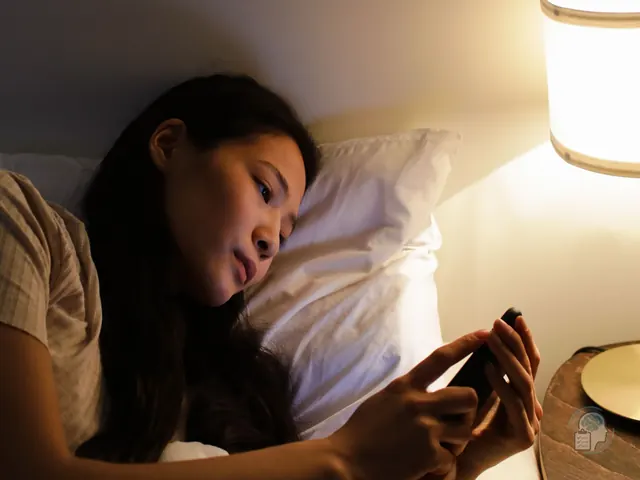
One unanswered message and you already fear the worst. What anxious attachment is, where it comes from, how it shows in relationships, whether it can change and which test can help you see it more clearly.
Emotional abuse in relationships: signs, effects and how to get out
There are no blows, but every day you recognise yourself a little less: you doubt yourself, you no longer see your friends and everything revolves around not setting him off. How to recognise emotional abuse and get out.