Does my child need a psychologist? Warning signs and what to expect
Tummy aches every Monday, no longer wanting to see friends, tantrums that keep getting worse. Is it a phase or does your child need help? When to take a child to a psychologist and what to expect.

He gets a tummy ache every Monday morning. He cries before going into school, although at home he says everything is fine. The tantrums, which seemed to belong to age three, have come back at nine and last longer each time. Or perhaps it is your fourteen-year-old daughter, who no longer leaves her room and answers in single words. And you do not know whether it is a phase that will pass on its own or whether you should do something.
Knowing when to take a child to a psychologist is one of the most common questions parents have, and there is no single answer. Most childhood worries are part of growing up. Others are not, and the sooner they are dealt with, the better. This guide helps you tell them apart, recognise the signs that are worth a consultation and know what happens in a session with a child psychologist.
Is it a phase or something more?
Many fears and worries are normal for a child's age. The NHS points out that between six months and three years separation anxiety is very common and usually stops at around two or three, and that at preschool age fears of animals, insects, storms, heights, water, blood or the dark are common and almost always go away on their own. It is also normal to feel anxious about starting a new school or before an exam, and some children are shy and need a little support in social situations.
The same source gives the key to knowing when it is no longer normal: anxiety becomes a problem when it is very strong or getting worse and does not go away, and when it gets in the way of daily life and stops your child doing things they used to enjoy. Put into three simple questions:
- How long has it lasted? A bad week is not the same as three months.
- How much does it get in the way? If it stops them going to school, sleeping, eating or seeing friends, it matters more.
- Is it a change? A child who was always calm and is suddenly irritable tells you more than one who was always lively.
Worrying is not an overreaction. The World Health Organization estimates that one in seven adolescents aged 10 to 19 has a mental disorder, that many of these conditions go unrecognised and untreated, and that when they are not treated their consequences extend into adulthood.
Signs that a child may need a psychologist
The signs change a great deal with age, because a young child cannot always explain what they feel and shows it through their body or their behaviour.
In young children
According to the NHS, when a young child is anxious you may notice that they are irritable, tearful or clingy, that they have trouble sleeping or wake in the night, that they start wetting the bed again or that they have bad dreams. Angry outbursts, sadness that does not go away or repeated behaviour problems are also signs worth asking about.
In school-age children
In older children, the NHS describes a lack of confidence to try new things, difficulty concentrating, problems with sleeping or eating, angry outbursts, lots of negative thoughts or the idea that bad things are going to happen, and starting to avoid everyday activities such as seeing friends, going out or going to school. Tummy aches or headaches that appear just before school and disappear at the weekend deserve attention, as do difficulties making friends.
In teenagers
In adolescence it is harder to tell what is normal from what is not, because mood swings are part of the age. The NHS acknowledges this and lists as possible signs of depression in teenagers continuous low mood or sadness, frequent tearfulness, expressing hopelessness, being irritable, getting little or no enjoyment from things they used to like, becoming increasingly isolated and sleeping badly. It also lists signs of a possible eating disorder: complaining about being fat despite a normal or low weight, letting people think they have eaten when they have not, being secretive about eating or becoming anxious when asked to eat.
Signs that cannot wait
Some situations should not be left to see whether they pass. The NHS includes among the signs of self-harm unexplained cuts, bruises or burns, usually on the wrists, arms, thighs or chest, and always keeping covered up even in hot weather. If this happens, if your child talks about dying or not wanting to live, stops eating or you suspect someone is hurting them, get help today:
- In immediate danger, call 112 or your local emergency number.
- If there are thoughts of suicide, in Spain the 024 line is free, confidential and available 24 hours a day, and also supports family members.
- In Spain, the ANAR Foundation helps children and adolescents on 900 20 20 10. Elsewhere, contact your local child helplines.
What a child psychologist does
Many people imagine child therapy as an adult asking questions and a child answering. It is not usually like that. The usual first step is talking to the parents to understand what is happening, since when and in which situations, and then getting to know the child using techniques suited to their age. Play, drawing or stories let a child express things they could not put into words.
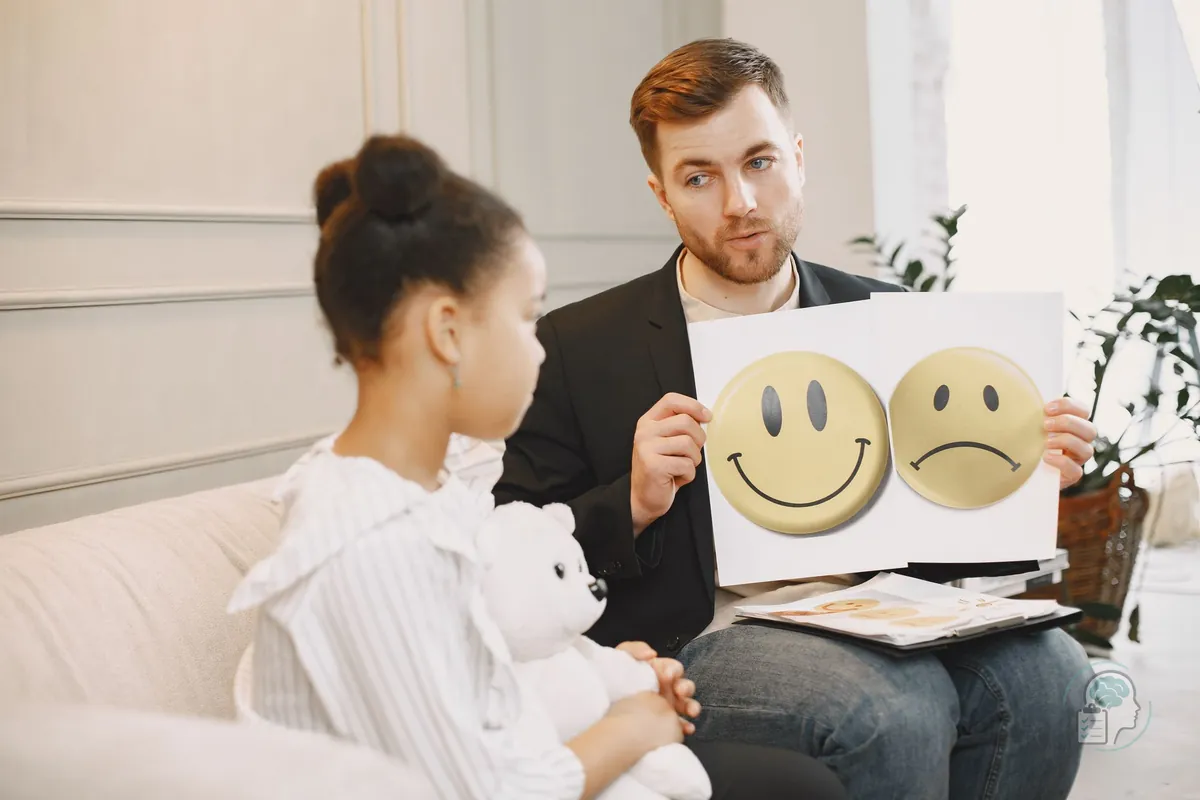
In child therapy, parents are part of the process. As well as the sessions with the child, there are usually guidance sessions with the family to understand what is going on, agree on strategies for home and reinforce what is worked on in the sessions. With very young children, much of the work is done precisely with the parents.
How to talk to your child before going
The NHS offers some tips for talking to a teenager who does not want to say what is wrong: avoid persistent direct questioning, tell them honestly that you are worried, remind them you will be there when they want to talk, do not blame yourself for what they are going through and, as far as possible, let them have a say in where to go for help. With younger children it works to explain it simply and without drama, for example as a person who helps children when something worries them or makes them sad.
And something that is sometimes forgotten: the NHS points out that family arguments and conflict can make children feel insecure and anxious. Looking after your child includes looking after yourself. If you feel overwhelmed, the Stress Test will help you measure it, and if you think you need help too, we explain it in When to see a psychologist: signs, common doubts and what happens in the first session. What happens in childhood leaves a mark in adulthood, as we explain in Childhood trauma in adults: how it shows up and what can be done, which is why acting early pays off.
How to choose a child psychologist
Three basic checks: that the professional is registered and licensed to practise, that they have specific experience with children and adolescents, and that they involve the family in the process.
At MyPsicoTest we recommend Xènia Capel Salcedo, a licensed clinical psychologist (COPC 14982) with a master's degree in Clinical Psychology and Psychotherapy, who offers child therapy at her practice in Igualada and also online. She uses techniques adapted to each age, such as play therapy and relaxation with sounds and music, and combines sessions with the child with guidance sessions for the parents. As she explains on her website, child therapy can start at around three or four years old; before that, the work focuses mainly on guiding the family. The first information call is free. If it suits you better, online therapy is also an option; if you have never had a video call with a psychologist, read Online psychologist: how to choose well and what to expect from video-call therapy first.
If your result worries you or you want a professional assessment, you can talk to Xènia Capel Salcedo, a licensed psychologist (COPC reg. 14982), who offers a free first consultation call and online therapy from anywhere.
MyPsicoTest team · Updated:
FAQ
Frequently asked questions
When should I take my child to a psychologist?
When a worry, a fear or a change in behaviour is intense, lasts for weeks, keeps getting worse or stops them leading a normal life: going to school, sleeping, eating or seeing friends. If there is self-harm, they talk about dying or they stop eating, do not wait.
From what age can a child see a psychologist?
There is no minimum age for asking for advice. Therapy with the child usually starts at around three or four years old, when they have some ability to communicate; at younger ages, the work focuses mainly on guiding the parents.
How long does a child therapy session last?
Usually between 45 and 60 minutes, depending on the child's age and needs. As well as the sessions with the child, guidance sessions with the parents are usually scheduled.
Do parents take part in the sessions?
It depends on the child's age and the stage of therapy. Usually parents take part in family guidance sessions, where they learn how to support the child at home and progress is reinforced. Cooperation between family and therapist is key.
What should I tell my child about seeing a psychologist?
The truth, adapted to their age and without drama: that you are going to see someone who helps children when something worries them or makes them sad. With teenagers it helps to explain why you are worried and let them have a say in the decision.
Is it normal for children to have fears?
Yes. According to the NHS, separation anxiety is very common up to the age of two or three, and fears of animals, storms or the dark are common at preschool age and usually go away on their own. They become a concern when they are very strong, do not go away or stop the child living a normal life.
Can child therapy be done online?
In many cases, yes, especially with older children and teenagers. With younger children, much of the work is done with the parents, which can also be done remotely. What matters is that the professional assesses which format works best in each case.
Related articles

Therapy for borderline personality disorder (BPD): what works and how to choose
Emotions that flare up, fear of abandonment and relationships that swing from all to nothing. When to seek help for BPD and which therapies have been shown to work.

Therapy for teenagers: how it works, what parents are told and how to choose
Your teenager barely talks, answers in single words and you cannot tell whether it is their age or something more. How therapy with a teenager works, what parents are told and how to choose.
Integrative therapy: what it is, how it works and when it is the right choice
CBT, EMDR, systemic, humanistic... and on many profiles, "integrative approach". What integrative therapy is, why so many psychologists use it, what the research says and how to tell if it is right for you.