Anhedonia: what it is, symptoms and what to do when nothing feels good any more
Things you used to enjoy no longer do anything for you and plans leave you cold. What anhedonia is, how it shows, why it happens and which test can help you tell if it applies to you.

It is your birthday and someone has organised a dinner for you. You smile at the right moments, say thank you, blow out the candles. Inside, you feel almost nothing. The same happens with the series you used to look forward to every week, with the music that used to lift your mood or with Friday-night plans: it is not that you feel sad, it is that nothing seems to matter.
There is a name for that: anhedonia. This guide explains what it is, how it shows in everyday life, what types there are, why it happens, how it relates to depression and which test can help you see whether it applies to you.
What is anhedonia?
The term was coined by the French psychologist Théodule Ribot in 1896 to describe the inability to feel pleasure. The DSM diagnostic manual defines it as diminished interest or pleasure in things that used to be rewarding. According to a review by Treadway and Zald, along with low mood it is one of the two core symptoms of depression: at least one of the two must be present for major depression to be diagnosed. The same authors note that about 37% of people with depression have clinically significant anhedonia.
It is not a lack of willpower or a whim, and it is not the same as feeling sad. That is exactly why it can be hard to recognise. The NHS warns that depression often comes on gradually, that many people try to cope with their symptoms without realising they are unwell and that sometimes it takes a friend or family member to notice that something is wrong.
Symptoms of anhedonia: how it shows in everyday life
One of the most widely used scales for measuring it, the Snaith-Hamilton Pleasure Scale, asks about four areas of everyday pleasure: food and drink, interests and pastimes, social interaction and pleasant sensory experiences. They are a useful guide to recognising the symptoms of anhedonia:
- Food loses its appeal. You eat because you have to, and your favourite dish no longer tastes of anything special.
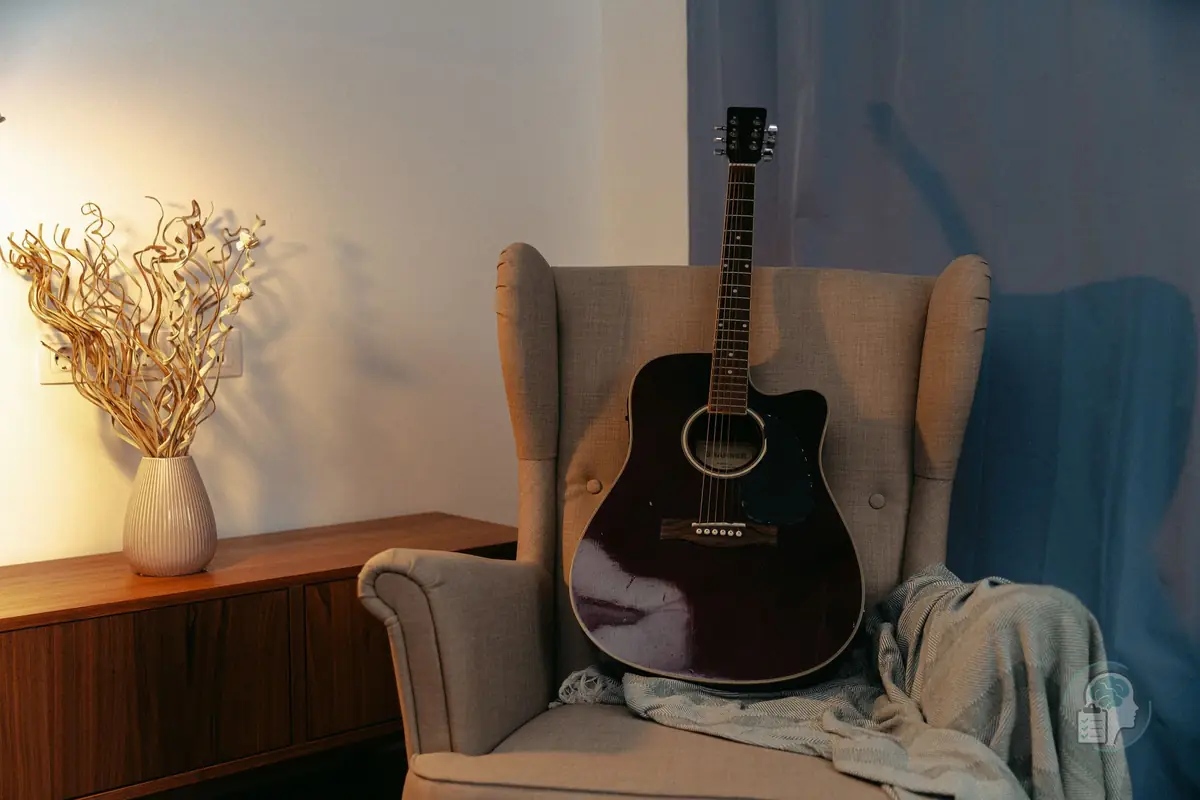
- Hobbies are put on hold. The guitar, sport, books. The NHS lists neglecting your hobbies and interests among the social symptoms of depression.
- Seeing people feels like a chore. You avoid friends or take part in fewer activities, another social symptom the NHS lists.
- Pleasant sensations do not land. A hot shower, sun on your face, a song you used to love.
- Your sex drive drops. The NHS counts it among the physical symptoms of depression.
- Achievements go uncelebrated. You finish something important and feel neither relief nor joy, just that it is time for the next thing.
Types of anhedonia: not enjoying or not wanting
Treadway and Zald suggest separating two sides of anhedonia that get mixed up in everyday life:
| Consummatory anhedonia | Motivational anhedonia | |
|---|---|---|
| What is affected | The pleasure when you experience something | The drive to go after it |
| How it shows | You go to the dinner and do not enjoy it | You know you would like the dinner, but cannot get yourself to go |
| What research calls it | "Liking" | "Wanting" |
The distinction is not just academic. The two authors explain that dopamine is involved mainly in the motivational side, the wanting, and that first-line medicines such as SSRIs do not seem to address the motivation and reward problems of depression well. That is why they consider anhedonia one of the hardest symptoms to treat.
Can you be depressed without feeling sad?
Yes. Because diagnosis requires either low mood or anhedonia, and one of the two is enough, some people with depression do not feel particularly sad but empty, flat or disconnected. If you have gone weeks without enjoying anything, even if you are not crying or feeling down, it is worth taking seriously. We explain how to tell depression from anxiety in Anxiety or depression: how to tell them apart and what to do if you have both.
Why anhedonia happens
Depression is the best-known cause, but not the only one. A meta-analysis by Trøstheim and colleagues, covering 168 studies and more than 16,000 participants who completed the Snaith-Hamilton Pleasure Scale, found more anhedonia than in healthy people among those with depression, schizophrenia, substance use disorders, Parkinson's disease and chronic pain. People with depression scored clearly higher than all the other groups: in depression, anhedonia affects many areas of pleasure at once, whereas in the other conditions it tends to be limited to a few.
The same study brings good news: people whose depression had remitted scored within the healthy range. The ability to enjoy things comes back.
Why anhedonia should be taken seriously
There are two strong reasons. First, a meta-analysis by Ducasse and colleagues, covering 15 studies, found that people with current suicidal thoughts had more anhedonia than others, and that the link held even after taking depression and other disorders into account. Second, in two large studies with more than 4,400 patients, Uher and colleagues found that low interest, reduced activity, indecisiveness and lack of enjoyment predicted a poorer response to antidepressants, regardless of how severe the depression was.
If you have thoughts of harming yourself or that life is not worth living, do not wait: in immediate danger, call 112 or your local emergency number, and in Spain the 024 line is free and available at any time.
Is there an anhedonia test?
In research, the benchmark is the Snaith-Hamilton Pleasure Scale: 14 statements about pleasant everyday situations, answered with the last few days in mind. It is considered the gold standard for measuring anhedonia in depression, but it is a clinical and research tool.
MyPsicoTest does not have a specific anhedonia test. What we do have is the Depression Test, and its first question is exactly this: "I have had little interest or pleasure in doing the things I usually enjoy." It is one of the nine questions of the PHQ-9, the questionnaire by Kroenke, Spitzer and Williams on which the test is based, and the test adds three more. There are 12 questions about the last two weeks, answered in about four minutes according to how often each thing has happened to you, grouped into three areas:
- Mood and motivation: besides loss of interest and pleasure, low mood, irritability or turning down plans you used to look forward to.
- Sleep, energy and appetite.
- Thoughts and concentration.
The score ranges from 0 to 36 and falls into five bands. You do not need to sign up, and your answers are not sent to any server. The results screen also includes the numbers to call if you have had thoughts of harming yourself.
Other tests that can help
If the disconnection shows up mainly at work and comes with exhaustion, the Burnout Test can guide you. All the questionnaires, free and anonymous, are in the psychological tests catalogue.
What helps with anhedonia
The first piece of good news has already come up: when depression remits, the ability to enjoy things usually returns. The second is that some treatments tackle it head-on. In a trial by Craske and colleagues, 96 people with severe symptoms of depression or anxiety received 15 weekly sessions of either a treatment focused on positive affect or a cognitive behavioural therapy focused on reducing threat sensitivity. Six months later, the first group had more positive affect, fewer symptoms of depression, anxiety and stress, and less suicidal ideation (1.7% versus 12%). This approach trains skills such as scheduling pleasant activities, savouring good moments and practising gratitude.
For depression in general, the NICE guideline considers behavioural activation especially helpful when low mood has led to doing fewer things: it means gradually bringing activities back without waiting to feel like it. We explain it in Therapy for depression: when to see a psychologist, what works and how to choose.
In the meantime, some things help:
- Do not wait until you feel like it. Choose something small and specific, such as a ten-minute walk or a phone call, and do it even if you do not want to.
- Notice what you do feel, however little. Savouring good moments is one of the skills that positive-affect treatments train.
- Stay in touch with people, even briefly. Withdrawing from others is one of the social symptoms of depression.
- Move. The NHS points out that exercise is one of the main treatments for mild depression.
- Tell someone you trust. Sometimes other people notice before you do that something is wrong.
If you have gone weeks without enjoying almost anything, therapy is the route with the most evidence behind it. At the end of the test you will find our recommendation of a licensed psychologist who works with anxiety and depression, online too.
If your result worries you or you want a professional assessment, you can talk to Xènia Capel Salcedo, a licensed psychologist (COPC reg. 14982), who offers a free first consultation call and online therapy from anywhere.
MyPsicoTest team · Updated:
FAQ
Frequently asked questions
What is anhedonia?
It is diminished interest or pleasure in things that used to be rewarding. The term was coined by Théodule Ribot in 1896, and today it is considered one of the two core symptoms of depression, along with low mood.
Is anhedonia the same as depression?
No. It is one of its core symptoms, but it also appears in other conditions, such as schizophrenia, substance use disorders, Parkinson's disease and chronic pain. In depression it tends to affect more areas of pleasure at once.
Can you be depressed without feeling sad?
Yes. Depression can be diagnosed when either low mood or anhedonia is present, so some depressed people do not feel sad but empty or indifferent.
What types of anhedonia are there?
A common distinction is between consummatory anhedonia, when you do not enjoy what you experience, and motivational anhedonia, when you lack the drive to seek out what you used to like.
Can anhedonia be cured?
The ability to enjoy things can come back. A meta-analysis found that people whose depression had remitted scored within the healthy range for anhedonia, and psychological treatments focused on positive affect have shown good results.
Is there a test to find out if I have anhedonia?
Research uses the Snaith-Hamilton Pleasure Scale, which has 14 statements. At MyPsicoTest, the depression test includes the PHQ-9 question on loss of interest and pleasure and helps you see whether it is worth getting advice.
When should I seek help?
If you have gone weeks without enjoying almost anything, if it is affecting your work or relationships or if you have thoughts of harming yourself. In that last case, call 112 or your local emergency number in immediate danger; in Spain, the 024 line is also available at any time.
Related articles

Therapy for seasonal affective disorder (SAD): what works and how to choose
Every autumn your mood sinks, you sleep more and everything is an effort until spring. When to seek help for seasonal affective disorder and what the therapy that works involves.

Therapy for postnatal depression: when to seek help, what therapy is like and how to choose
Everyone tells you to enjoy it, and all you want to do is cry. How to tell if it is postnatal depression, when to ask for help and what effective therapy is like, including from home.

Therapy for depression: when to see a psychologist, what works and how to choose
You have felt flat for weeks and wonder whether a psychologist could help. Which therapies work for depression, how many sessions they usually take and how to choose well.