Types of dyslexia: what they are and how they show in adults
Phonological, surface, mixed, developmental, acquired... What types of dyslexia there are, what research says about them and how each one shows in an adult reader.
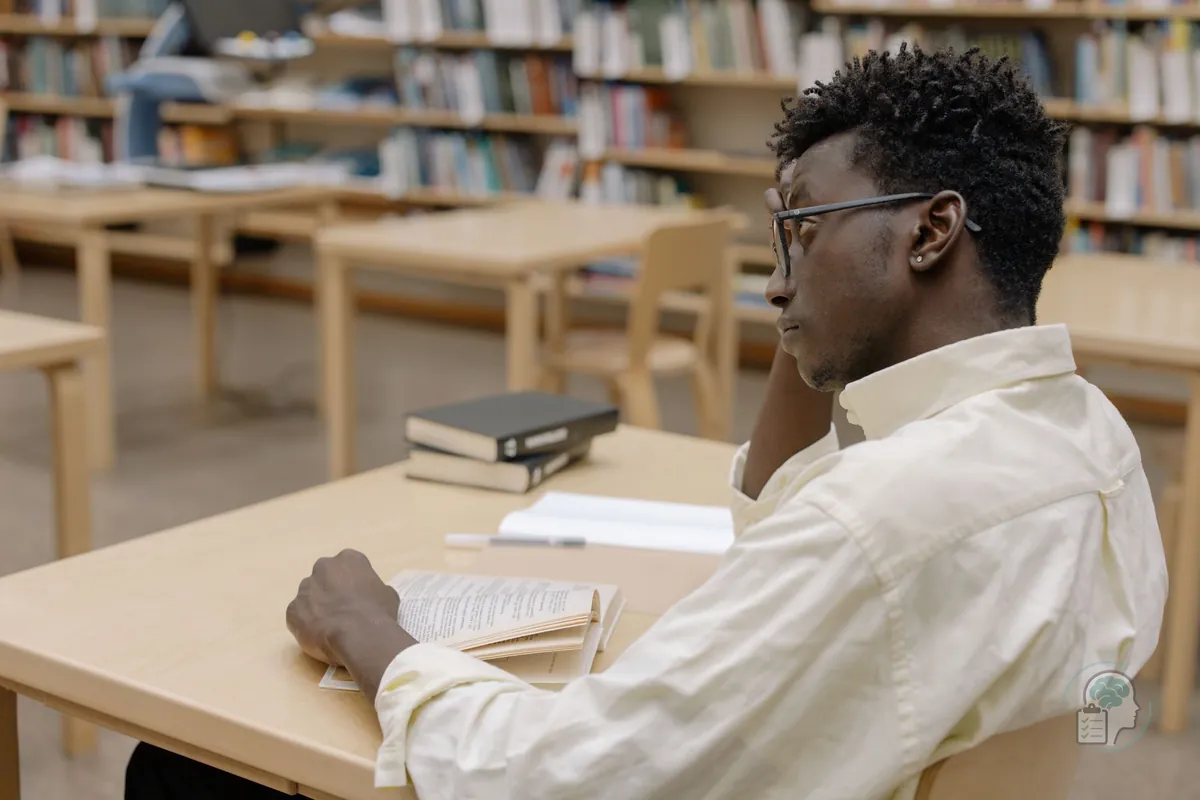
You read a work email twice before it makes sense. You write a word and are not sure how it is spelled. At school you were told you were careless or not trying hard enough, and as an adult you have learned to get by: spellcheck, voice notes, rereading. One day you look for information and find a pile of labels: phonological, surface, mixed, developmental, acquired dyslexia...
This guide explains what types of dyslexia there are, what research says about them (which is less clear-cut than some websites suggest), how each one shows in an adult and which test can guide you before you ask for an assessment.
What is dyslexia?
The British Dyslexia Association (BDA), the leading UK dyslexia charity, uses a consensus definition developed with a wide range of experts: dyslexia is a set of processing difficulties that affect the acquisition of reading and spelling. Across all languages, difficulties with reading fluency and spelling are its key markers. It exists on a continuum, with different degrees of severity, and depends on multiple genetic and environmental influences.
The same definition notes that the most commonly observed difficulty is in phonological processing, meaning the ability to work with the sounds of words, but that this does not explain all the variation seen: working memory, processing speed and orthographic skills also play a part. That is why not everyone with dyslexia reads the same way, and why people talk about types. And one important point from the NHS: dyslexia does not affect intelligence.
Developmental and acquired dyslexia
The first big distinction is about when it appears:
- Developmental dyslexia: present from the time a person learns to read. This is what people usually mean by dyslexia, the kind that is picked up (or missed) at school and continues into adulthood.
- Acquired dyslexia: appears in someone who used to read normally and loses part of that ability after a brain injury. The NHS explains that difficulties with reading and writing are part of aphasia, a language disorder often caused by a stroke or brain injury.
If reading difficulties appear suddenly, together with weakness on one side of the face or body or problems speaking, it is an emergency: call 112 or your local emergency number. From here on, this article focuses on developmental dyslexia, which is what the test looks at.
Types of developmental dyslexia: phonological, surface and mixed
To understand the subtypes, it helps to know that we use two routes when we read. One turns letters into sounds and lets us read a new or made-up word. The other recognises words we already know at a glance. In 1993, Castles and Coltheart compared 56 people with developmental dyslexia with 56 typically developing readers and found at least two varieties: one with difficulties in the route that recognises words and another in the route that turns letters into sounds. They also found that these were not rare cases but fairly common.
Phonological dyslexia
In phonological dyslexia, turning letters into sounds is the main difficulty. The person relies on words they already know, so they cope with everyday vocabulary and stumble over anything new. In an adult it may show when reading technical terms, proper names, foreign words or acronyms they have never seen.
Surface dyslexia
In surface dyslexia, what fails is recognising whole words. The person can work out almost any word letter by letter, but slowly, almost spelling it out, and finds it hard to remember how words are spelled. In English this is especially visible with irregular words, whose spelling does not match how they sound; in more regular languages, such as Spanish, it shows mainly as slowness and spelling doubts between letters that sound the same.
Mixed dyslexia
Mixed dyslexia affects both routes at once. Peterson, Pennington and Olson studied a large sample of children and found that those with "pure" phonological dyslexia had milder phonological difficulties than those who also had orthographic problems, and that pure cases were more common among older children. In other words, many profiles combine both difficulties.
| Type | What is hardest | How it may show in an adult |
|---|---|---|
| Phonological | Turning letters into sounds | Stumbling over new words, technical terms, proper names or acronyms |
| Surface | Recognising words at a glance | Reading slowly, almost spelling words out, and spelling difficulties |
| Mixed | Both | Slow reading with errors, and more effort with long texts |
The types are not fixed boxes
The classification helps understanding, but it is not exact. The same Peterson study found cases that no model explained well, and even people without dyslexia who read normally despite having orthographic difficulties. The BDA definition stresses that dyslexia is a continuum. That is why, rather than a label, what is useful about an assessment is the profile: what you find hard, what you do well and which kinds of support help you.

Dyslexia in transparent languages: more slowness than errors
Language matters. Spanish is a transparent language: words are almost always read as they are written. A study by Serrano and Defior at the University of Granada compared Spanish-speaking children and teenagers with dyslexia, aged 8 to 16, with two control groups and found difficulties on every task, but much clearer ones when time was measured than when errors were counted. Their results match those from other transparent languages, such as Italian and German: in these languages, dyslexia shows more in speed than in accuracy.
So if you read a transparent language, dyslexia may show less as obvious errors and more as slowness, tiredness and the need to reread. This fits the list of signs of dyslexia in adults from the NHS: often spelling words wrong, confusing words that look similar, needing to read something several times before it makes sense, feeling tired after a lot of reading and writing, finding it hard to tell left from right, forgetting dates or names, getting confused by more than one instruction at a time, or being skilled in some areas but struggling with tasks most people find easy.
What is not a type of dyslexia
Dyscalculia (difficulty with numbers) or dysgraphia (difficulty with handwriting) are sometimes presented as "types of dyslexia", but they are different difficulties that can occur alongside it. The BDA points out that dyslexia frequently co-occurs with other developmental difficulties, such as developmental language disorder, dyscalculia, ADHD and developmental coordination disorder. If you also recognise yourself in distractibility and impulsiveness, the ADHD Test will help you find out.
How to tell if you have dyslexia as an adult
You do not need to know which type you might have to take the first step. The MyPsicoTest Dyslexia Test is designed for adults: it has 20 statements about what usually happens to you, now and throughout your life, which you answer in about six minutes according to how much you agree. They are grouped into three areas:
- Reading: speed, the need to reread, skipping lines or confusing similar words.
- Writing and spelling: frequent spelling mistakes, doubts when writing or difficulty organising ideas on paper.
- Memory, sequencing and organisation: remembering sequences such as the months, telling left from right or following several instructions in a row.
The score ranges from 0 to 80 and falls into four bands, from "few indicators" to "high indicators". The test does not distinguish between types of dyslexia and does not diagnose: it tells you how closely your experience matches that of adults with dyslexia. You do not need to sign up, and your answers are not sent to any server.
If your result suggests it, the next step is an assessment. The NHS explains that it is not done by a medical doctor but by a psychologist or a dyslexia specialist, who looks at your reading, writing and use of numbers. And remember that dyslexia has nothing to do with intelligence: some people with a high IQ read with effort, as we explain in IQ score: what it measures, what is normal and what a high IQ means. If you suspect something else is going on, Neurodivergence in adults: what it means, signs and where to start covers how dyslexia, ADHD and other conditions combine. All the questionnaires, free and anonymous, are in the psychological tests catalogue.
If your result worries you or you want a professional assessment, you can talk to Xènia Capel Salcedo, a licensed psychologist (COPC reg. 14982), who offers a free first consultation call and online therapy from anywhere.
MyPsicoTest team · Updated:
FAQ
Frequently asked questions
How many types of dyslexia are there?
The usual distinction is between developmental dyslexia, present from when a person learns to read, and acquired dyslexia, which appears after a brain injury. Within developmental dyslexia, three profiles are described, phonological, surface and mixed, although in practice many cases combine features.
What is the difference between phonological and surface dyslexia?
In phonological dyslexia, turning letters into sounds is hard, so new or made-up words cause problems. In surface dyslexia, recognising words at a glance is hard, so reading is slow, almost letter by letter, and spelling is difficult.
What is mixed dyslexia?
It combines phonological difficulties with difficulties recognising words. It tends to be more severe than the pure profiles, and features often overlap.
What is acquired dyslexia?
It is dyslexia that appears in someone who used to read normally, after a brain injury such as a stroke. If reading difficulties come on suddenly, seek emergency care.
Does dyslexia look the same in every language?
Not quite. In transparent languages such as Spanish or Italian, it shows mainly as slow reading and spelling difficulties rather than reading errors, while in English errors with irregular words are more visible.
Can an online test tell me which type of dyslexia I have?
No. A questionnaire can show whether your experience resembles that of adults with dyslexia, but only a professional assessment with reading and writing tests can describe your specific profile.
Who diagnoses dyslexia in adults?
A psychologist or a dyslexia specialist, not a medical doctor. The assessment looks at reading, writing and other skills, and helps you understand your profile and ask for support.
Related articles

Poor spelling in adults: carelessness, lack of practice or dyslexia?
You doubt how to spell a word you use every day and the spell-checker does not save you. When poor spelling in adults points to dyslexia and which test can help.

Why do I read so slowly? Causes of slow reading in adults and when it is dyslexia
You read the same sentence three times and by the end of the page you cannot remember what it said. Why reading is so hard for you, what a normal speed is and when it may be dyslexia.

Compassion fatigue: what it is, the symptoms and how to tell if it is happening to you
You care for other people every day and notice you no longer feel the same, or that you feel everything too much. What compassion fatigue is and which test can help you measure it.