
Parental burnout: when to see a psychologist, what therapy involves and how to choose
You love your children, but you wake up with nothing left and do everything on autopilot. What parental burnout is, when to ask for help and what effective therapy is like.

It is half past seven in the evening. You have picked up the children, done homework with the eldest, and the youngest is crying because he does not want a bath. You snap at him more than you would like and, when they finally fall asleep, you feel empty rather than relieved. You love them more than anything, but for weeks you have been doing everything on autopilot and you hardly recognise yourself.
That has a name: parental burnout. It does not mean you are a bad mother or a bad father: it is what happens when the demands of parenting outweigh your resources for a long time, and it can be treated. If you are thinking about therapy for parental burnout, this guide explains when it is worth asking for help, which treatment works, what therapy is like from the inside, how long it takes, whether it works online and how to choose a professional.
Parental burnout: when to see a psychologist
The team that has studied it most, led by Isabelle Roskam and Moïra Mikolajczak at the Catholic University of Louvain, describes it with four features, which we also cover in Emotional exhaustion: symptoms, causes and how to tell if it is burnout:
- Exhaustion in your role as a parent: you wake up with no energy for the day with your children.
- Contrast with who you were: you no longer recognise yourself as the parent you used to be.
- Feeling fed up: you have had enough of that role.
- Emotional distance from your children: you look after them on autopilot, with less patience and less closeness than you actually feel.
It is not simply a matter of how many children you have or how many hours you spend with them. In a study by Roskam and colleagues of 17,409 parents in 42 countries, the rate of parental burnout varied enormously from one country to another and was higher in individualistic cultures, such as Western ones. That factor mattered more than economic inequality, the number or age of the children or the hours spent with them. A review by Ren and colleagues also linked it to perfectionism, low self-esteem, a high need for control, lack of social support, dissatisfaction with the relationship and children's illness or behaviour problems, although many of those factors came from only a few studies.
Ask for help if you have felt like this for weeks, if you no longer enjoy anything with your children or if you feel more and more distant from them. And do not wait if other signs appear: in a study by Mikolajczak and colleagues of 1,551 parents, parental burnout was specifically linked to wanting to escape, suicidal thoughts and neglect or violence towards children. If you have thoughts of harming yourself, call the 024 line in Spain (free, confidential, around the clock), 112, or your local emergency number. And if you are afraid of losing control with your children, ask for help today from your GP or a psychologist, or call 112 if there is immediate danger.
To get your bearings, the MyPsicoTest Burnout Test is designed mainly for work, although its page explains that the strain of caring for a relative has the same features and that you can answer it with that role in mind; for parenting it works as a clue, not a diagnosis. Researchers use a specific questionnaire, the Parental Burnout Assessment. If sadness is what weighs most, the Depression Test can help you see whether there is something more. And if the exhaustion began after giving birth, postnatal depression should be ruled out: we explain it in Therapy for postnatal depression: when to seek help, what therapy is like and how to choose.
Which treatment works for parental burnout
The research is recent but promising. A meta-analysis by Urbanowicz and colleagues, published in 2026, pulled together 15 studies with 1,380 parents. In the controlled trials, psychological and educational interventions reduced parental burnout moderately to substantially, and the effect lasted for up to three months afterwards. Cognitive behavioural approaches, mindfulness and acceptance-based approaches, educational programmes and approaches that rebalance demands and resources worked similarly, both in families in general and in families with a child who has a chronic condition.
The authors found five shared ingredients: psychoeducation, self-regulation and stress management, work on values and identity, putting what is learned into practice, and attention to relationships.
What therapy for parental burnout is like from the inside
Every process is different, but it usually covers these points:
- Understanding what is happening: that parental burnout is real, that it is not a lack of love and that it comes from an imbalance between demands and resources.
- Rebalancing the scales: removing demands that are not needed and adding resources, such as help, sharing the load with your partner, rest or time of your own.
- Working on perfectionism and guilt, to move from the perfect parent to the good-enough one. If high self-demands are how you work in general, Being too hard on yourself: when high standards stop helping may help.
- Regulating stress and emotions, so that you do not explode and can calm down when the day goes wrong.
- Getting closer to your children again. A network analysis by Blanchard and colleagues identified emotional distance as the feature that most activates the others, so recovering small moments of connection is usually a priority.
- Looking at your values: what kind of parent you really want to be, away from other people's expectations and the perfect parenting of social media.
- Looking at your partner and family, because in the same study by Mikolajczak parental burnout was linked to more conflict between partners.
What if it is depression?
The two can go together. The difference lies in how far it reaches: parental burnout centres on parenting, while depression colours everything, including work, friendships and the things you used to enjoy. If you feel sad most of the day, have lost interest in almost everything or have thoughts of death, it is worth having it assessed by a professional and, if needed, by your GP. Medication is decided by a doctor, not a psychologist.
How long therapy for parental burnout takes
The programmes studied tend to be short, lasting a few weeks. In the meta-analysis by Urbanowicz, six-week programmes seemed to bring larger reductions, although the authors treat this as an exploratory finding. In individual therapy it depends on how long you have felt this way, the support you have and whether there is anxiety or depression. What is clear is that it is not worth waiting for the children to grow up before asking for help.
Does online therapy for parental burnout work?
It can be the easiest option when you have nobody to leave the children with. In a trial by Lappalainen and colleagues with 110 parents of children with chronic conditions or developmental disabilities, an internet-based acceptance and commitment intervention with three video sessions with a psychologist reduced burnout as much as the self-help version, and improved depression and psychological flexibility more.
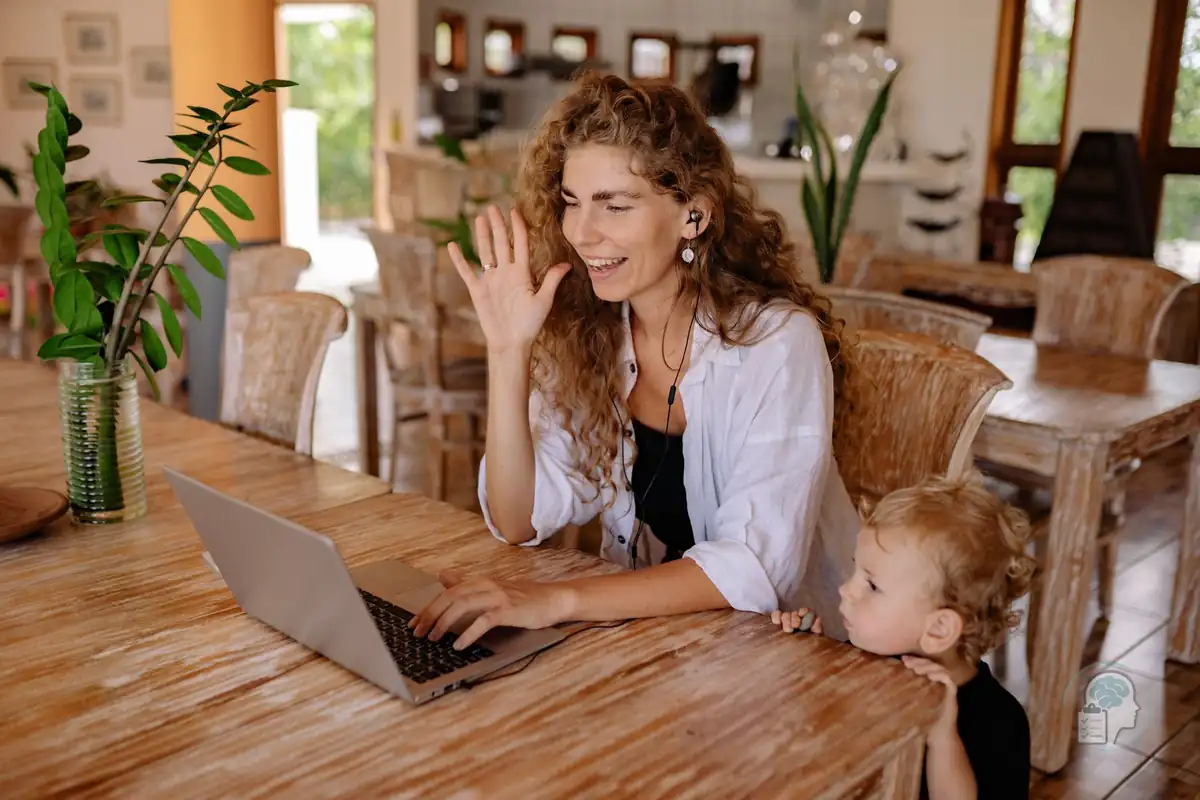
With online therapy you join from home, during a nap or when someone else is with the children, with no travel and no waiting rooms. If you have never had therapy by video call, Online psychologist: how to choose well and what to expect from video-call therapy may help.
How to choose a psychologist for parental burnout
These checks help you get it right:
- Registration as a health professional. This comes first.
- Knowledge of parental burnout, and the ability to tell it apart from depression, anxiety or postnatal depression.
- An evidence-based approach, such as cognitive behavioural therapy or acceptance-based therapies.
- Concrete goals around sharing the load, rest and connection with your children, beyond simply letting off steam.
- The option of involving your partner when sharing the load or conflict is part of the problem.
- Flexibility: online sessions and appointment times that fit around your children.
- A space without judgement, where you can say you are fed up with your role without feeling like a bad mother or father.
A psychologist for parental burnout
At MyPsicoTest we recommend Xènia Capel Salcedo, a licensed clinical psychologist (COPC 14982) with a master's degree in Clinical Psychology and Psychotherapy. She sees clients in Igualada and Sant Sadurní d'Anoia and also through online therapy, and on her blog she has written an article about parental burnout. In it she describes it through three signs (physical and emotional exhaustion, emotional distancing from the children and loss of fulfilment in the parenting role) and explains that in therapy she works on expectations, overload, emotional regulation and the relationship with the children, using tools from cognitive behavioural therapy, self-compassion and acceptance, in person or online. She works from an integrative, evidence-based approach: on her website she explains that she uses tools from cognitive behavioural therapy, EMDR, systemic therapy and person-centred therapy. Sessions are available in English, Spanish or Catalan, and the first contact is a free, no-commitment information consultation. She herself points out that in a serious crisis or psychiatric emergency, immediate in-person care is what is needed.
If your result worries you or you want a professional assessment, you can talk to Xènia Capel Salcedo, a licensed psychologist (COPC reg. 14982), who offers a free first consultation call and online therapy from anywhere.
MyPsicoTest team · Updated:
FAQ
Frequently asked questions
What is parental burnout?
It is intense exhaustion linked to parenting that appears when its demands outweigh a parent's resources for a long time. It is described with four features: exhaustion in the parenting role, contrast with who you were, feeling fed up and emotional distance from the children.
What are the symptoms of parental burnout?
Waking up with nothing left, looking after your children on autopilot, not enjoying anything with them, feeling you are not the parent you used to be, getting irritated by everything and, often, a lot of guilt.
How is it different from the normal tiredness of parenting?
Normal tiredness improves with rest or help and does not change your bond with your children. Parental burnout lasts weeks or months, does not go away after a free weekend and comes with emotional distance and a loss of enjoyment in your role.
Is it the same as postnatal depression?
No, although they can overlap. Postnatal depression appears during pregnancy or in the first year after the birth and affects mood in general. Parental burnout is tied to parenting and can appear at any stage.
Which therapy works for parental burnout?
A 2026 meta-analysis of 15 studies found that cognitive behavioural, mindfulness and acceptance-based, educational and demand-resource rebalancing interventions reduce it moderately to substantially, with effects that last for months.
Does online therapy work for parental burnout?
Yes. In a trial with 110 parents, an internet-based intervention with three video calls with a psychologist reduced burnout, and online therapy saves you having to find someone to look after the children.
When should I ask for urgent help?
If you have thoughts of harming yourself, call the 024 line in Spain, 112 or your local emergency number. If you are afraid of losing control with your children, ask for help today from your GP or a psychologist, or call 112 if there is immediate danger.
Related articles
Compassion fatigue: what it is, the symptoms and how to tell if it is happening to you
You care for other people every day and notice you no longer feel the same, or that you feel everything too much. What compassion fatigue is and which test can help you measure it.

Academic burnout: symptoms, causes and how to tell if your studies have burnt you out
You open your notes and nothing goes in, your degree has lost its point and not even the holidays recharge you. What academic burnout is and which test can help you measure it.

Therapy for carers: carer burnout, when to get help and how to choose
For months your life has revolved around someone else, and you cannot remember the last afternoon you had to yourself. When to ask for help and what therapy for carers is like.